
If you have spotted yellow, crusty, or flaky patches on your baby's scalp, you have probably already started Googling. Take a breath. Baby cradle cap looks a lot scarier than it actually is, and it is one of the most common skin conditions in young babies. It does not hurt them, it is not your fault, and in most cases it clears up with simple, gentle care at home.
Cradle cap (the medical name is infantile seborrheic dermatitis) usually appears in the first few weeks or months of life. Many parents first notice it during a diaper change or after a bath, when those yellow flakes become more obvious. It can look greasy, scaly, or like a thick crust, and even though it is harmless, plenty of parents feel a little anxious the first time they see it.
This guide walks through what cradle cap actually is, what causes it, how to gently treat it at home, and when it makes sense to check in with your pediatrician. Every baby is different, so think of this as a starting point and a friendly second opinion, not a strict set of rules.

Hi friend, cradle cap looks dramatic but is usually one of the easiest baby things to deal with. Be gentle with the scalp, be gentle with yourself, and know that it almost always sorts itself out.
What Is Cradle Cap?
Cradle cap is a common, non-contagious skin condition that mostly affects babies under 3 months old, though it can show up anytime in the first year. It usually appears on the scalp, which is where the nickname comes from, but the same patches can pop up on the eyebrows, behind the ears, on the eyelids, in the neck folds, and sometimes on the diaper area or armpits.
The patches tend to be yellow, white, or brownish, with a slightly greasy or waxy feel. Some babies have just a few small flakes, while others have thicker scales that cover most of the scalp. Underneath the patches the skin may look a little pink or red, but cradle cap is not usually itchy, painful, or upsetting for babies. Most little ones do not even notice it.
It is worth saying clearly because so many parents wonder: cradle cap is not caused by anything you did. It is not related to how often you bathe your baby, what you feed them, or anything in your home environment. It is just a very common, very normal part of having a brand-new body that is still figuring out how to regulate oil and skin cells.
What Causes Cradle Cap?
The exact cause of cradle cap is not fully understood, but the general guidance from pediatricians is that it likely involves two main factors. The first is overactive oil glands in your baby's scalp, which may be reacting to hormones passed from the parent during pregnancy. As those hormone levels naturally fade in your baby over the first months, cradle cap usually fades along with them.
The second factor is a type of yeast called Malassezia that lives normally on everyone's skin. Some babies' skin reacts more strongly to this yeast, which can contribute to the flaky, scaly patches. This is not an infection, and it does not mean anything is wrong with your baby's immune system. It is just one of those quirky things that some babies experience and others do not.
You may also notice that cradle cap shows up alongside other very common newborn skin things, like baby eczema or small skin changes that come and go. These conditions are different from one another, but they can overlap. If you are unsure what you are looking at, your pediatrician can help you tell the difference at your next visit.
How to Gently Treat Cradle Cap at Home
The good news is that most cradle cap responds well to a simple, gentle routine. Many parents find that consistency matters more than any particular product. Here is an approach that tends to work well for mild to moderate cases.
1. Loosen the Scales With Oil
About 15 to 20 minutes before bath time, rub a small amount of baby-safe oil (such as plain mineral oil or a pediatrician-approved baby oil) into the patches on your baby's scalp. You only need a thin layer, just enough to coat the flakes. Let it sit so it can soften the scales. Some parents find that doing this during a calm part of the day, like before a feed or during a story, works nicely.
2. Wash With a Mild Baby Shampoo
Next, gently shampoo your baby's scalp with a mild, fragrance-free baby shampoo. Massage the suds in with your fingertips, paying extra attention to the areas where the flakes are. The combination of oil and shampoo helps lift the scales without irritating the skin.
3. Brush Gently With a Soft Brush
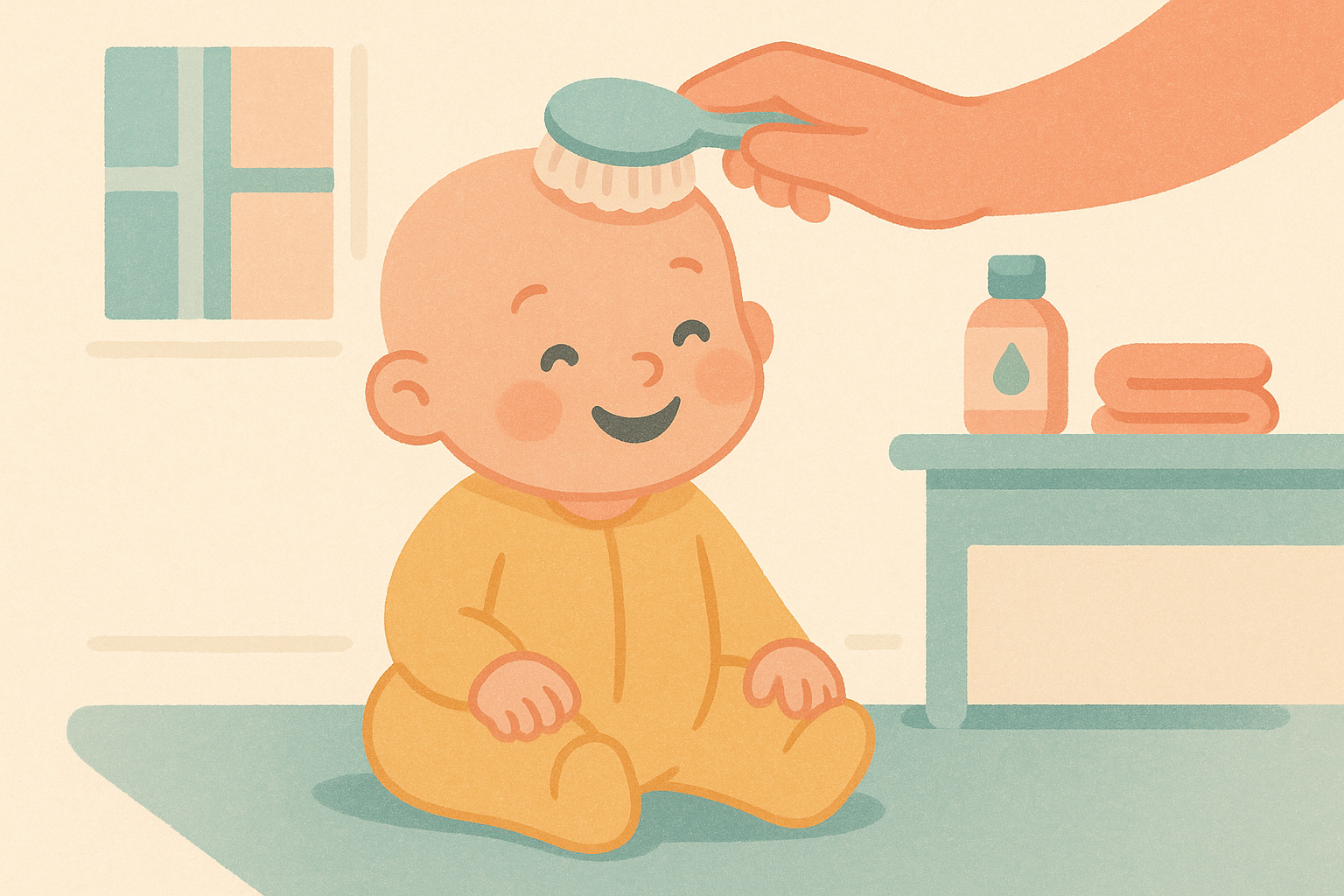
While the shampoo is in, use a very soft baby brush or a soft-bristled toothbrush to gently sweep over the patches in small circular motions. This loosens flakes that are ready to come off. Do not press hard or try to scrape, just light, soft motions. Rinse thoroughly with warm water.
4. Pat Dry and Repeat as Needed
Pat your baby's scalp dry with a soft towel, then carry on with your normal routine. Some babies need this treatment only once or twice, while others benefit from doing it once or twice a week for a little while. If you do not see any change after a few weeks of gentle care, or if the patches look worse, that is a good time to check in with your pediatrician.
How Long Does Cradle Cap Last?
Cradle cap timelines vary a lot from baby to baby, but the table below gives a rough sense of what many parents see. Remember, every baby is different, and your baby may follow their own path.
| Baby's Age | What Many Parents Notice | What Often Helps |
|---|---|---|
| 0 to 2 months | Cradle cap often first appears as small yellow or white flakes on the scalp | Gentle daily scalp care with a soft brush during bath time |
| 2 to 4 months | Patches may thicken or spread slightly, often peaking around this age | Oil-soak before bath, mild shampoo, soft brush 1 to 2 times per week |
| 4 to 8 months | Scales typically begin to lift and fade with regular gentle care | Continue routine, watch for any new redness or irritation |
| 8 to 12 months | Cradle cap has usually cleared up on its own by this point | If patches remain or return, talk to your pediatrician |
| Past 12 months | Persistent or returning patches are less common at this age | Pediatrician visit to rule out eczema or other skin conditions |
General timeline based on common parent experiences. Your baby's timeline may look different, and that is okay.

If you treat the scalp once or twice a week, jot a quick note about when you did it. Patterns like "patches got smaller after the oil soak" make it much easier to spot what is helping.
What Not to Do
It is very tempting to pick at those flakes, especially the ones that look like they are about to fall off on their own. Try to resist. Picking can irritate the skin underneath, sometimes causing tiny breaks where bacteria can get in. The same goes for using a fine-tooth comb or a metal nit comb to scrape the scalp. A soft brush and a gentle touch are always the safer choice.
Many parents also wonder about adult dandruff shampoos. These are not usually recommended for babies, since they can be too harsh for delicate scalp skin and can sting if they get into the eyes. Stick to mild baby shampoo unless your pediatrician specifically recommends something stronger. The same goes for products marketed as cradle cap miracle cures. Some can be helpful, but it is worth running them by your pediatrician first.
And while regular bathing is fine, over-washing can sometimes make cradle cap look worse by drying out the scalp. Most babies do well with a bath every 2 to 3 days, with a quick wipe-down on the in-between days as needed. Your own baby may have a different rhythm, and that is fine. The key is gentle, consistent care rather than aggressive scrubbing.
When to Talk to Your Pediatrician
Most cradle cap clears up at home without any special treatment, but there are times when it makes sense to loop in your pediatrician. Reach out if the patches are spreading rapidly to other parts of the body, look very red or inflamed, ooze fluid, smell unusual, or seem to be bothering your baby. These can sometimes signal that the area has become irritated or, less commonly, infected, and your pediatrician can guide you on next steps.
It is also a good idea to check in if your home routine has not made any difference after a few weeks, if the cradle cap is severe enough to involve hair loss beyond the normal newborn shedding, or if your baby seems itchy or uncomfortable. Some babies benefit from a medicated shampoo or a gentle prescription cream, and your pediatrician can help you choose what is right.

If the patches turn red, weepy, or your baby seems uncomfortable, that is a good moment to call the pediatrician. There is no such thing as a silly question when it comes to your baby's skin.
If your baby also has eczema-prone skin, allergies in the family, or other rashes alongside cradle cap, your pediatrician may want to take a closer look to make sure you are treating the right thing. Bringing a few photos of how the patches change over a week or two can be really helpful at the visit.
Cradle Cap and Your Daily Routine
The nice thing about cradle cap care is that it slots easily into your existing rhythms. Many parents find that pairing the oil soak with a quiet wind-down, then doing the shampoo and brush during your usual bedtime bath routine, makes it feel less like a chore and more like a normal step. You do not need a separate cradle cap routine, just a gentle adjustment once or twice a week.
It can also be helpful to keep a light log of what you are seeing. Notes like "small patches behind the ears today" or "patches looked smaller after Tuesday's oil soak" can help you spot trends without having to remember everything in the moment. Pippy makes this easy by letting you add quick notes alongside feeds, diapers, and sleep, so when your next pediatrician visit rolls around, you have a clear picture ready to share.
And finally, give yourself permission to relax about how it looks. Many of the cradle cap photos online lean toward the dramatic. The patches you are looking at right now are almost certainly normal, expected, and very temporary. Your baby still has the cutest head in the world, flakes and all.
Track Cradle Cap and Your Baby's Skin in One Place
Pippy's free baby tracker lets you note when you treat cradle cap, log skincare details next to bath and feed times, and spot patterns over weeks. It is a friendly way to keep your pediatrician visits productive without juggling a notebook.
Try Pippy Free