
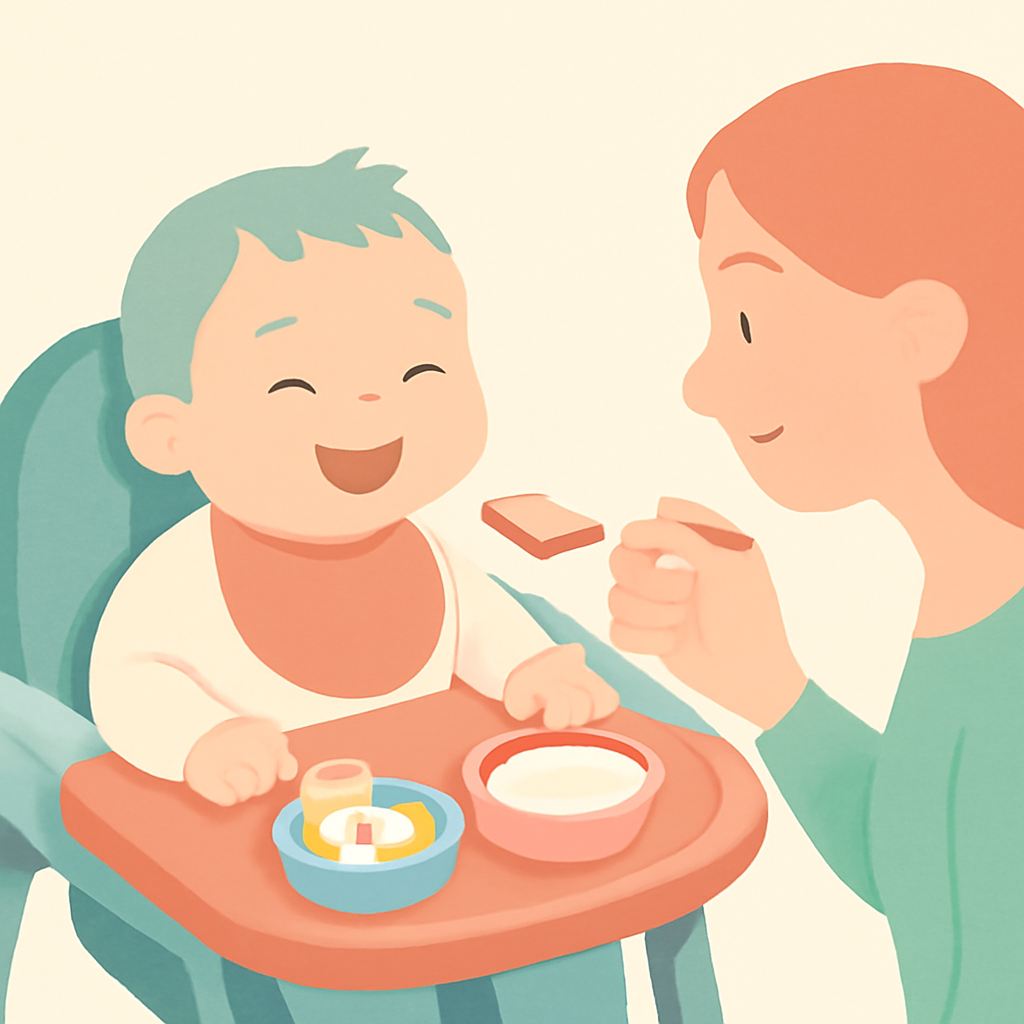
If the thought of introducing allergenic foods to your baby makes your stomach flip a little, you are in very good company. Peanut, egg, dairy, the list can feel intimidating, and a lot of us grew up hearing that these foods should be delayed for as long as possible. The advice has shifted quite a bit in recent years, and the newer thinking is actually a relief for many parents.
The short version is this: for most babies, introducing common allergenic foods earlier rather than later, around the time they start solids, is now widely encouraged. It can feel like a big step, but with a calm, one food at a time approach, it becomes just another part of the messy, joyful adventure of feeding a baby.
Below we will walk through when to start, which foods count as the common allergens, how to offer them safely, and what to watch for afterward. As always, your pediatrician knows your baby best, so use this as a friendly starting point for that conversation.

Take a deep breath, you do not have to do this perfectly. Going slow, one food at a time, is exactly the right pace.
Why the advice changed
For a long time, the common wisdom was to hold off on foods like peanut and egg, sometimes for years. More recent research pointed in a different direction, and the general guidance from many pediatricians now leans toward introducing these foods earlier, often around the time a baby is ready for solids.
The thinking is that early, regular exposure may help a baby's body get familiar with these foods in a friendly way. This does not guarantee a baby will never develop an allergy, and every baby is different, but for many families the early approach has become the default starting point. Your pediatrician can tell you whether this general guidance fits your baby, especially if there is a strong family history of food allergies or if your baby has other risk factors.
It is worth saying clearly: if your baby has severe eczema, an existing food allergy, or you have any concerns, talk to your pediatrician before introducing peanut or egg. Some babies may need a tailored plan or even an in office introduction, and that is completely normal.
Is my baby ready?
Allergens are not a separate milestone from solids, they go hand in hand with starting solid foods in general. Most babies show signs of readiness somewhere around 4 to 6 months, though the exact timing varies from baby to baby. There is no prize for being first, and there is no penalty for being a little later, so follow your own baby's cues.
Many parents find these signs helpful to watch for: your baby can sit up with support and hold their head steady, they seem interested in what you are eating, and they have started to lose that reflex that pushes food back out of their mouth with their tongue. When solids in general feel like a fit, allergens can be part of that same journey.
If you want a refresher on how solids fit into the bigger picture, our guide to the baby feeding schedule by age walks through how feeding evolves over the first year. And if you are still wondering about portions in the early months, how much a newborn should eat can help set expectations.
The most common allergenic foods
Most food allergies in babies and young children come from a fairly short list of foods. Knowing the list takes a lot of the mystery out of the process, because you can plan to introduce each one in a baby friendly form rather than feeling like there are hidden dangers everywhere.
The common allergens to introduce intentionally include peanut, egg, cow's milk dairy such as yogurt and cheese, tree nuts, soy, wheat, fish, shellfish, and sesame. The key is to offer each in a texture that is safe for a baby, since whole nuts, thick spoonfuls of nut butter, and chunks of firm food can be choking hazards. Smooth, thinned, or well mashed versions are the way to go.
| Common allergen | A baby friendly way to offer it |
|---|---|
| Peanut | Smooth peanut butter thinned with warm water, breast milk, or formula, or a little peanut powder stirred into a familiar puree |
| Egg | Well cooked egg, mashed or pureed, or mixed into another food your baby already enjoys |
| Dairy (cow's milk) | Plain whole milk yogurt or a little soft cheese (plain cow's milk as a drink usually waits until around 12 months) |
| Tree nuts | Smooth nut butters thinned out, or finely ground nuts mixed into puree, never whole |
| Soy | Soft tofu, mashed, or plain soy yogurt |
| Wheat | Iron fortified wheat cereal, or small soft pieces of bread or pasta as your baby is ready for textures |
| Fish & shellfish | Well cooked, deboned, and finely mashed or flaked into a smooth texture |
| Sesame | Smooth tahini thinned into a puree, or a little stirred into a food your baby knows |
Serving ideas only. Always adjust textures to your baby's stage and ask your pediatrician if you are unsure, especially about choking risk.
How to introduce allergens safely
A calm, predictable routine makes this so much easier. The general guidance most parents follow is to introduce one new allergenic food at a time, then wait a few days before adding the next one. This way, if your baby does react, you have a much better idea of which food was involved.
Many parents find it helps to offer a new allergen earlier in the day rather than right before bed, so you can keep a relaxed eye on your baby for a few hours afterward. Start with a small taste, and if all goes well, you can gradually offer a bit more over the following days. Doing this at home, rather than at daycare or a restaurant, is also a good idea for the very first try.
One gentle tip: mixing a new allergen into a food your baby already loves can make the whole thing smoother. A little thinned peanut butter swirled into a familiar puree, or some well cooked egg mashed into something cozy, often goes over better than a brand new food on its own.

Jot down each new allergen and the date you tried it. A quick log makes it easy to spot patterns and to share a clear picture with your pediatrician.
Watching for a reaction
Most of the time, introducing allergens goes smoothly and uneventfully, which is exactly what you are hoping for. Still, it helps to know what a reaction can look like so you feel prepared rather than anxious. Mild signs can include hives, redness or swelling around the mouth, an upset tummy, vomiting, or unusual fussiness shortly after eating.
Severe reactions are less common but important to recognize. These can include trouble breathing, swelling of the lips, tongue, or throat, repeated vomiting, or your baby suddenly becoming very pale or floppy. If you ever see signs of a severe reaction, call emergency services right away. For milder symptoms, reach out to your pediatrician to talk through what you saw and what to do next.
Because some allergic responses overlap with other common baby issues, it is always worth checking with your doctor rather than guessing. For example, skin changes can have many causes, and our overview of baby eczema basics is a good reminder that not every rash is a food reaction. When in doubt, your pediatrician is your best resource.

If you ever notice trouble breathing or swelling of the lips or tongue, treat it as an emergency and call for help right away. Trust your gut.
Keeping allergens in the rotation
Here is a part that surprises a lot of parents: introducing an allergen once is usually not the finish line. The general guidance is that once your baby has happily tolerated a food, it helps to keep offering it regularly as part of their normal meals. Think of it as keeping that friendly familiarity going rather than a one and done checkbox.
You do not need a complicated system for this. Working a little peanut, egg, or dairy into your baby's week, in whatever forms they enjoy, is usually plenty. Every baby is different in their preferences, so expect some foods to be instant hits and others to take a dozen tries before your little one warms up. That back and forth is completely normal.
If you would like a tidy way to remember which allergens your baby has tried, how they reacted, and which ones to keep rotating in, that is exactly the kind of thing Pippy is built to help with. A simple log takes the mental load off your plate so you can focus on the fun, messy mealtime moments.
Track allergen introductions without the mental juggling
Pippy lets you log each new food, note any reactions, and see at a glance which allergens your baby has tried and tolerated, so you always have a clear record to share with your pediatrician.
Try Pippy Free