
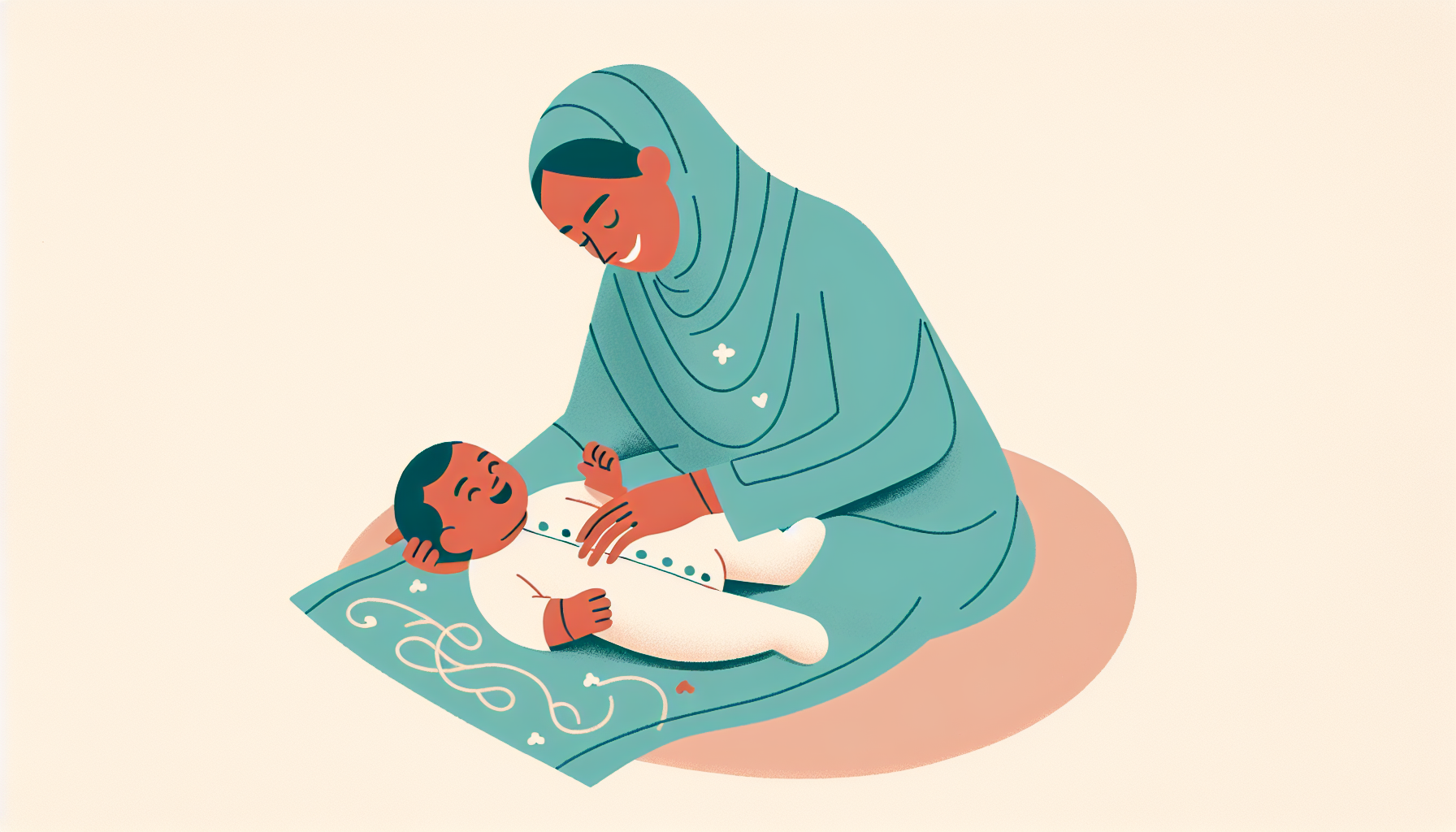
Few things in early parenthood feel quite as magical as the moment your baby looks up at you and breaks into a real smile. After weeks of round-the-clock feedings, diaper changes, and very little sleep, that first genuine grin can feel like the ultimate reward. If you have been watching your newborn's face closely and wondering when do babies start smiling, you are definitely not alone.
The truth is, babies actually smile much earlier than many parents realize, but those earliest smiles are not quite what they seem. Understanding the difference between a reflex smile and a true social smile can help you appreciate every stage of your baby's development. And when that intentional, eyes-lit-up smile finally arrives, you will know it.
In this guide, we will walk through the smile timeline, explain what is happening behind the scenes in your baby's developing brain, and share simple ways to encourage those heart-melting grins. Every baby is different, so consider this a general roadmap rather than a strict schedule.

Your baby's first social smile is one of those milestones you will remember forever. Grab a camera and keep it close!
Reflex Smiles vs. Social Smiles
If your newborn flashed a little grin during their very first week, you probably felt a rush of joy. While that moment is absolutely worth celebrating, those earliest smiles are typically what pediatricians call reflex smiles. Reflex smiles are involuntary muscle movements that happen during sleep, while passing gas, or simply as your baby's nervous system develops. They tend to be fleeting, often lasting just a second or two, and they do not involve eye contact.
A social smile, on the other hand, is a completely different experience. Social smiles are intentional responses to something your baby sees, hears, or feels. When your baby looks right at your face, their eyes brighten, and their whole expression lights up, that is a social smile. Many parents describe it as the moment they truly felt their baby "saw" them for the first time. Social smiles often come with other engagement cues like cooing, wriggling, or waving their arms.
It can sometimes be tricky to tell the difference in those early weeks. A helpful way to think about it: if the smile happens while your baby is asleep or looking away, it is most likely a reflex. If it happens while they are alert and making eye contact with you, especially in response to your voice or face, you are probably seeing the real thing.
Baby Smile Timeline by Age
While every baby follows their own unique path, here is a general guide to what many parents can expect when it comes to smiling milestones. Remember, these are approximate ranges. Some babies hit them a bit earlier, others a bit later, and both are perfectly normal.
| Age | Type of Smile | What You Might Notice |
|---|---|---|
| Birth to 4 weeks | Reflex smile | Brief, random smiles during sleep or relaxation |
| 4 to 6 weeks | Early social smile | Fleeting grins when looking at faces, not always consistent |
| 6 to 12 weeks | True social smile | Clear, responsive smiles with eye contact, often with cooing |
| 3 to 4 months | Frequent social smiling | Smiles at familiar people, may laugh for the first time |
| 5 to 6 months | Selective smiling | Big smiles for caregivers, may be cautious with strangers |
These ranges reflect general developmental patterns. Your pediatrician can help you understand your baby's individual timeline.
Around the 6 to 12 week mark is when most parents notice that unmistakable social smile. It often shows up during quiet, alert moments, like during a feeding, a diaper change, or when you are simply talking to your baby face to face. If you are curious about other milestones that happen around this age, our baby milestones month by month guide covers the full picture.
What Is Happening in Your Baby's Brain
Your baby's first social smile is not just adorable. It is actually a sign of significant brain development. In those first weeks of life, your baby's brain is forming billions of new neural connections every day. The areas responsible for vision, social recognition, and emotional response are developing rapidly, and smiling is one of the first visible signs that these systems are coming online.
When your baby smiles at you, it means they are starting to recognize familiar faces, process emotions, and intentionally communicate. It is their very first way of saying, "I see you, and I like being with you." Research suggests that the back-and-forth of smiling between parent and baby, sometimes called "serve and return" interaction, plays an important role in healthy brain development during the first year.
This is also why face-to-face time matters so much in the early months. Every time you smile at your baby and they smile back, you are strengthening the neural pathways that support social and emotional growth. It does not need to be complicated or structured. Simply being present, making eye contact, and responding warmly is enough.
How to Encourage Your Baby to Smile
The good news is that encouraging your baby to smile does not require any special techniques or equipment. The most effective approach is simply being warm, present, and responsive. Here are some things many parents find helpful.
Get close and make eye contact. Newborns can only see clearly about 8 to 12 inches from their face, which happens to be roughly the distance between your face and theirs during feeding. Take advantage of these close moments to look into your baby's eyes and smile. Talk to them in a warm, sing-song voice. Babies respond strongly to the sound of their caregiver's voice, and the slightly exaggerated tone that most people naturally use with babies (sometimes called "parentese") actually helps hold their attention.
You can also try gentle facial expressions, like raising your eyebrows, opening your mouth wide, or sticking out your tongue. Babies are wired to watch and imitate faces, even from a very early age. Skin-to-skin contact is another wonderful way to encourage engagement and connection. Many parents notice their baby is especially alert and responsive during or just after skin-to-skin time.
Above all, try not to put pressure on yourself or your baby. Smiling will come when your little one is ready. Some babies are naturally more expressive, while others take a more observant approach to the world. Both are completely normal. If you are looking for other ways to support your baby's early development, our baby babbling timeline covers another exciting communication milestone that often follows closely behind smiling.

Logging your baby's first smile in Pippy is a great way to remember exactly when it happened. You will love looking back at that date!
When to Talk to Your Pediatrician
Because every baby develops at their own pace, there is a wide range of what is considered normal when it comes to smiling. That said, most pediatricians look for social smiling to emerge by around 2 to 3 months. If your baby has not shown a social smile by their 3-month checkup, it is worth mentioning to your doctor. This does not necessarily mean anything is wrong. Some babies simply need a little more time, and your pediatrician can help determine whether everything is developing as expected.
It is also a good idea to mention any concerns if your baby was premature, since developmental milestones for preemie babies are often measured from their due date rather than their birth date. A baby born four weeks early, for example, may reach the social smile milestone about four weeks later than the typical range. Your pediatrician will use your baby's adjusted age to assess their progress.
Other things your doctor may ask about include whether your baby makes eye contact, responds to sounds, and seems interested in faces. Smiling is just one piece of a larger developmental picture, and your pediatrician can look at the whole picture to give you peace of mind. For more on building a relationship with your child's doctor, check out our guide on how to choose a pediatrician.
Tracking Your Baby's Milestones
Keeping track of when your baby reaches milestones like their first social smile can be really valuable, both for your own memories and for conversations with your pediatrician. Many parents find that the early months go by in a blur of sleepless nights and feeding sessions, and it is easy to forget exactly when certain things happened.
Writing down the date of your baby's first smile, first laugh, and other milestones gives you a record you can share at checkups. It also helps you notice patterns in your baby's development and celebrate the progress they are making, even on the hard days. Whether you use a notebook, a phone app, or a simple note on the fridge, having a system that works for you makes all the difference.
If you are tracking feedings, sleep, and diapers already, adding milestone notes to the same place keeps everything organized and easy to find. Many parents who use Pippy appreciate being able to log everything in one spot, so they always have the full picture when they head to the pediatrician.
Never Miss a Milestone
Pippy makes it easy to log your baby's first smile, first laugh, and every milestone in between. Track feedings, sleep, and development all in one place, so you always have the full picture for your next pediatrician visit.
Try Pippy Free