
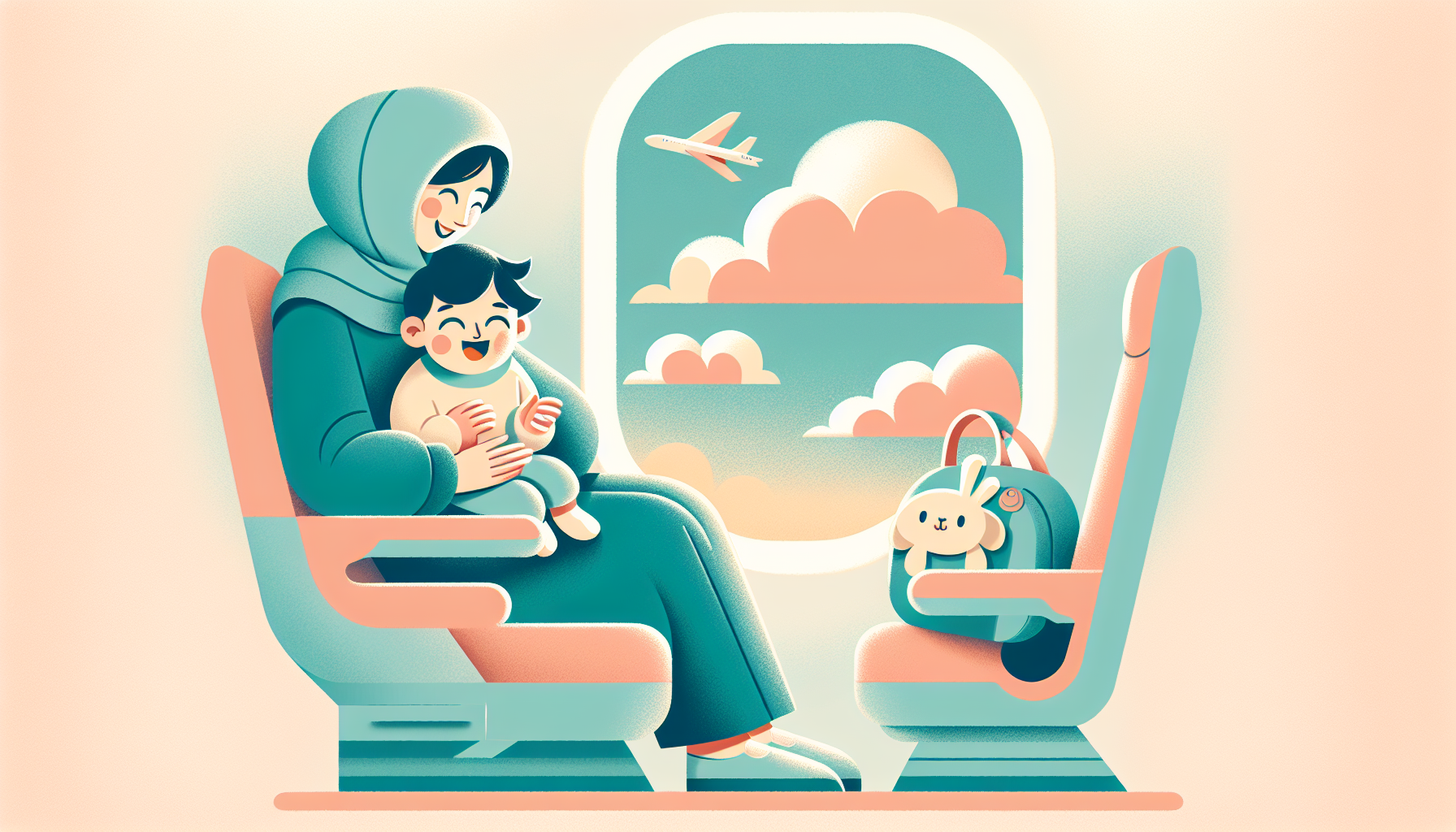
The first time you fly with a baby, the airport feels twice as long, every announcement sounds like it might be about you, and the boarding line stretches into the next zip code. You are not imagining it. Flying with a tiny human is a real adventure, and it is also extremely doable. Many parents come back from their first trip a little surprised at how okay it actually went.
The honest truth is that flying with a baby is mostly logistics with a side of patience. The flight itself is rarely the hard part, especially for very young babies who tend to sleep through engine noise. The trickier pieces are usually the airport, the timing, and packing the right stuff so you are not digging through your bag while a stranger watches. Once those pieces are set up, the trip itself often becomes the easy part.
This guide walks through the practical pieces parents tend to ask about: choosing a flight that fits your baby, packing a carry on that actually works, getting through security calmly, easing ear pressure, feeding mid flight, and what to do if your baby has a meltdown at 30,000 feet. Every baby is different, so use what helps and skip what does not.

Big trips with little babies look scarier in your head than they feel in real life. Plan the boring stuff in advance, and the rest tends to fall into place.
- Before You Book: Choosing the Right Flight
- Is My Baby Old Enough to Fly?
- Packing the Carry On for a Baby
- Getting Through the Airport with a Baby
- Soothing Ear Pressure on Takeoff and Landing
- Feeding and Diapering Mid Flight
- Naps, Nights, and Jet Lag
- When the Wheels Come Off
- When to Talk to Your Pediatrician
- Frequently Asked Questions
Before You Book: Choosing the Right Flight
The flight you choose can make a huge difference in how the day feels. Many parents find that direct flights, even slightly more expensive ones, are worth it for any trip with a baby. Skipping a layover means one less boarding process, one less takeoff and landing for little ears, and a lot less stuff to repack on the way. If a direct option is not possible, a longer layover can be friendlier than a short one, since rushing across an airport with a stroller and a diaper bag tends to be the moment everything spills.
Time of day is the next big lever. Some parents swear by flights that line up with their baby's longest nap, since a sleeping baby on a plane is a beautiful thing. Others prefer early morning flights, when babies tend to be in a better mood and airports are calmer. Late evening flights can backfire when a baby gets a second wind right at boarding. Look at your baby's typical rhythm rather than what looks ideal on paper. If you want a refresher on how nap patterns shift with age, our baby nap schedule by age guide has a quick overview.
Seat choice matters more than people expect. A bulkhead row often comes with extra leg room and, on some longer flights, a bassinet that hooks to the wall for small babies. Window seats give you a wall to lean against for nursing or rocking. Aisle seats give you a quick exit for diaper changes. There is no right answer, just the one that fits your trip.
Is My Baby Old Enough to Fly?
Most airlines allow babies to fly within a few days of birth, though many pediatricians suggest waiting until at least 2 to 3 months for non urgent travel. The reasoning is gentle, not alarming: very young babies are still building their immune systems, and crowded airports are full of new germs. For families with travel plans tied to a specific date, like meeting grandparents or a family wedding, your pediatrician is the best person to weigh in on whether earlier travel makes sense.
Babies who were born premature, have heart or lung concerns, or are recovering from an illness sometimes need a closer look before flying. Cabin pressure changes are gentle, but they are not nothing, and your pediatrician can review the specifics. The same goes for babies with current ear infections or significant congestion, since pressure changes can be more uncomfortable in those cases.
For older babies, the question is less about safety and more about logistics. Babies who are crawling or pulling to stand often want to move, which can make a long flight feel longer for everyone. Many parents find that the easiest flying window is roughly 3 to 8 months, when babies are past the very fragile stage but not yet busy little explorers. That window is not a rule, just a pattern many parents notice.
| Baby Age | What Tends To Be Easier | What Tends To Be Trickier |
|---|---|---|
| 0 to 2 months | Lots of sleep, easy to hold, predictable feeds | Immune system is still developing, frequent feeds |
| 3 to 5 months | Sleeps in a carrier, smiles at strangers, settles quickly | Earlier wake windows can mean fussy stretches |
| 6 to 8 months | Sits well, entertained by simple toys, takes solids | Stranger awareness can start, more diaper changes |
| 9 to 14 months | Engages with picture books and snacks | Wants to crawl and stand, lap sitting feels confining |
| 15 to 24 months | Can watch a short show, enjoys window views | Big feelings, needs activities, last lap infant flights |
A general pattern many parents notice. Every baby is different, and your baby's temperament matters more than the calendar.
Packing the Carry On for a Baby
Packing for a flight is where most of the parent magic happens. Many parents find it helps to pack as if the flight will be twice as long as scheduled, since delays and tarmac waits are part of the deal. The goal is not to bring everything, it is to bring the right things in a bag you can actually open with one hand.
The basics tend to include about twice the diapers you think you will need, a generous pack of wipes, a small changing pad, two full outfit changes, a change of shirt for the parent holding the baby, plenty of feeding supplies, a small blanket, a couple of pacifiers if you use them, and one or two quiet toys. A wet bag for dirty clothes is often a hero item. So is a small bag of plastic bags for blowouts and snack trash. If you want a deeper packing list to reference, our what to pack in a diaper bag post has a full breakdown you can adapt for travel.
Feeding supplies depend on how you are feeding. Breastfeeding parents often need very little extra. Formula feeding usually means pre measured formula in clean bottles, with a separate water bottle for mixing. Many parents find it easier to bring single use formula packets than scoop and measure on a tray table. If your baby is on solids, a few pouches and a spoon cover most flights, plus a couple of safe finger foods if you offer them.
Worth packing for you, not the baby: a fully charged phone, headphones, a refillable water bottle to fill after security, snacks that are not crumbly, and a small zip pouch with chapstick, hand cream, and a few hair ties. The plane is dry, the day is long, and small comforts go a long way. Many parents also find that bringing a clean change of shirt for themselves saves the rest of the trip, since baby spit up has excellent aim.

Pack the diaper bag the night before, then count one more time in the morning. Future you, in row 14 with a wiggly baby, will thank you.
Getting Through the Airport with a Baby
The airport is often where parents feel most exposed, but it can be the smoothest part if you set yourself up. Many airlines offer family boarding, which usually means boarding right after first class. That extra time tends to make stowing the diaper bag and getting settled a lot less stressful. If you have not flown with your specific airline before, a quick search for their family boarding policy is worth two minutes.
Strollers and car seats fly free on most airlines. Many parents find that gate checking the stroller and car seat is the smoothest move, since you can use both right up until you board and pick them up at the door of the plane on arrival. A lightweight travel stroller, even a different one from your everyday stroller, can make a huge difference in the airport.
For security in the United States, the TSA allows breast milk, formula, and baby food through screening in reasonable quantities. You can keep these in your carry on, just let the agent know at the start. Babies do not need to remove their shoes, and parents typically do not need to remove the baby from a carrier, though policies vary slightly by airport. Many parents find that wearing the baby in a carrier through security frees up both hands for the bins.
Built in time is your friend. Many parents find that arriving 30 to 45 minutes earlier than they would for a solo trip removes a lot of low grade panic. That cushion lets you stop for a feed, do one more diaper change before boarding, or just sit at the gate without checking the clock every two minutes.
Soothing Ear Pressure on Takeoff and Landing
Ear pressure is the part of flying many parents worry about most, and the news is mostly good. Babies are usually fine with cabin pressure changes, even if they cry briefly during a steep climb or descent. The swallowing motion is what helps equalize the pressure, so the goal is to give your baby something to swallow during takeoff and the start of descent.
Many parents nurse, offer a bottle, or give a pacifier during these times. If your baby is sleeping comfortably during a climb or descent, there is usually no need to wake them, since sleeping babies tend to swallow on their own. Older babies on solids can sip water from an open or straw cup, or chew on a soft snack like a puff. The descent tends to matter more than takeoff for ears, so save part of a feed for the start of the way down if you can time it.
If your baby is sick, congested, or has had recent ear tubes, talk to your pediatrician before flying. A stuffy nose can make pressure changes more uncomfortable, and your pediatrician can suggest specific strategies based on your baby's situation. A handful of crying minutes during descent is normal and not a sign of harm. If your baby seems unusually upset, has a fever, or pulls at their ears for hours after landing, that is a good time to call your pediatrician.
Feeding and Diapering Mid Flight
Feeding on a plane is usually less awkward than parents expect. Window seats give you a quiet wall to lean on, and most flight attendants are warm and discreet about feeding parents. If you are nursing, a light cover or muslin blanket is plenty if you want one, and you do not need one if you do not. If you are bottle feeding, asking the flight attendant for warm water for warming a bottle is a normal request. Pre measured formula and clean bottles make the actual mixing simple. For a refresher on typical feeding amounts at different ages, our how much should a newborn eat guide is a useful baseline.
Diaper changes on planes happen on a tiny pull down changing table inside the lavatory. It is small, it is awkward, and it is fine. Many parents find that putting a folded changing pad or muslin blanket down first makes the surface feel less weird. A blowout midair feels like a major event and almost never is. A second outfit and a wet bag handle most of it.
Hydration matters too. Cabin air is dry, and many parents find that offering an extra feed or two during a long flight helps. If you notice fewer wet diapers than usual after a long travel day, give your baby a chance to catch up with extra feeds, and check in with your pediatrician if it persists. Our post on the signs of dehydration in babies is a quick reference for what to watch for.
Naps, Nights, and Jet Lag
Sleep on a plane usually goes one of two ways. Younger babies often pass out the moment the engines start humming, especially in a carrier. Older babies sometimes need a little more help, since the noise, lights, and excitement can keep them wired. Many parents find that a short, familiar version of the bedtime routine, like a quick feed, dim lights, and a soft song, signals sleep even on a plane.
Jet lag with a baby is usually less dramatic than jet lag with adults, but it is real. For trips of one or two time zones, many babies adjust within a day or two without much intervention. For longer time changes, many parents find it helps to shift gradually toward the new time zone in the first day or two: morning light exposure on arrival, normal meal times in the new zone, and a slightly stretched or shortened wake window for the first few nights.
Try not to expect a perfect sleep day right after travel. Many babies have one rough night after a flight, then settle. Lower the bar, plan a slow first morning, and let the rhythm find itself. If your baby's sleep stays disrupted for more than a week or feels off in ways that worry you, that is a good time to check in with your pediatrician.
When the Wheels Come Off
Sometimes the carefully planned flight unravels, and the whole plane gets to hear about it. Take a breath. A crying baby on a plane is not an emergency, it is a Tuesday. Most fellow passengers are far kinder than the loud stories on the internet suggest. Many have been the parent in row 22 themselves.
When a meltdown hits, many parents find that walking the aisle, if the seatbelt sign is off, helps reset everyone. Standing and bouncing in the back galley is a classic move. A new toy, even a small one your baby has not seen in a few weeks, can buy ten minutes of distraction. So can a window shade going up and down, an empty water bottle to crinkle, or a quiet song right next to the ear.
If nothing helps and your baby just needs to cry it out for a few minutes, that is okay too. Babies cry, planes are loud, and the moment passes. Many parents find that a quiet "thanks for your patience" to the seatmate after the storm goes a long way, but you are not obligated to apologize for your baby being a baby.
When to Talk to Your Pediatrician
Most flights with a baby are uneventful. Still, a quick check in with your pediatrician before booking is a good idea, especially for a first flight, a young infant, or any baby who has had recent illness. Your pediatrician knows your baby's specific situation, including any conditions or medications, and can flag anything that deserves extra thought.
After the flight, talk to your pediatrician if your baby has a fever, seems unusually fussy or sleepy for more than a day, has fewer wet diapers than usual, pulls at their ears for hours, or has any other change that worries you. Travel days are a lot, and a quick call is always reasonable. As a general rule, if something feels off, the call is worth making.
Travel days throw off rhythms. If your gut says something is off after a flight, your pediatrician would much rather hear from you than not.
Track Feeds and Diapers from the Window Seat
Pippy logs feeds, naps, and diapers in a single tap, even on airplane mode. Land in a new time zone with a clear picture of when the next feed is due, what your baby ate at the gate, and how many diapers you have packed for the ride home.
Try Pippy Free