
The first time you bathe a newborn, it can feel like the highest stakes five minutes of your week. They are small, they are slippery, they are usually loudly unimpressed, and there is a lot of advice floating around about what you are supposed to do. If you have been quietly nervous about it, you are in very good company.
Here is the reassuring part. Learning how to bathe a newborn is mostly about setting up well beforehand and moving through a short, predictable sequence. The bath itself does not need to be long. It does not need to be perfect. In the early weeks it is really just a warm wipe down with a few extra steps, and most parents find it gets easier by the third or fourth try.
This guide walks through when to start, how to do a sponge bath, what to gather before you begin, a step by step tub bath, how often newborns actually need washing, and what to do when your baby is not a fan. Every baby is different, so treat this as a friendly starting point rather than a set of rules.

Hi there. Nobody is graceful at the first newborn bath, and that is completely fine. Slow, warm, and short beats fast and fancy every single time.
When to Give a Newborn Their First Bath
Hospitals used to bathe babies within an hour or two of birth, but the more common approach now is to wait. The general guidance is to delay the first full bath for at least the first several hours, and often the first day or so, which gives your baby time to regulate their temperature and keeps the vernix, that creamy white coating, on their skin a little longer. Many parents find their hospital or birth center already handles this and simply wipes the baby down.
Once you are home, the usual suggestion is to stick with sponge baths until the umbilical cord stump has fallen off and the belly button area has healed. For many babies that happens somewhere in the first one to three weeks, though some take a bit longer. If your baby was circumcised, your pediatrician will likely give you separate guidance on when that area can be submerged.
There is no prize for moving to the tub quickly. Some babies get their first real tub bath at two weeks and some at four, and both are perfectly normal. If you are unsure whether the cord area looks healed, that is a great quick question for your pediatrician at your next visit or over the phone.
How to Give a Sponge Bath
A sponge bath is exactly what it sounds like, a gentle wipe down with a warm, damp washcloth while your baby stays out of the water. Lay a towel on a firm, flat surface, like a changing table or even the floor with a folded blanket underneath, and keep one hand on your baby the entire time. Warm the room first if you can, because cool air is usually the part babies object to most.
Undress your baby down to their diaper and cover them with a dry towel, then uncover one small area at a time. Start with the face using plain water and no soap, wiping each eye from the inner corner outward with a different corner of the cloth. Work down to the neck, where milk loves to collect in the creases, then the arms, hands, chest, back, and legs. Save the diaper area for last and wipe front to back.
Pat everything dry as you go, especially the folds in the neck, thighs, and armpits, since trapped moisture can lead to irritation. Keep the umbilical cord stump dry and let it get some air. If you notice flaky patches on the scalp during these early washes, that is often cradle cap, which is very common and usually not uncomfortable for your baby.
What to Gather Before You Start
The single biggest thing that makes newborn bath time easier is having everything within arm's reach before your baby is undressed. Once your hands are on a wet, wriggly baby, you cannot go get the towel you forgot, and you should never step away to fetch it. Setting up first turns a stressful scramble into a calm few minutes.
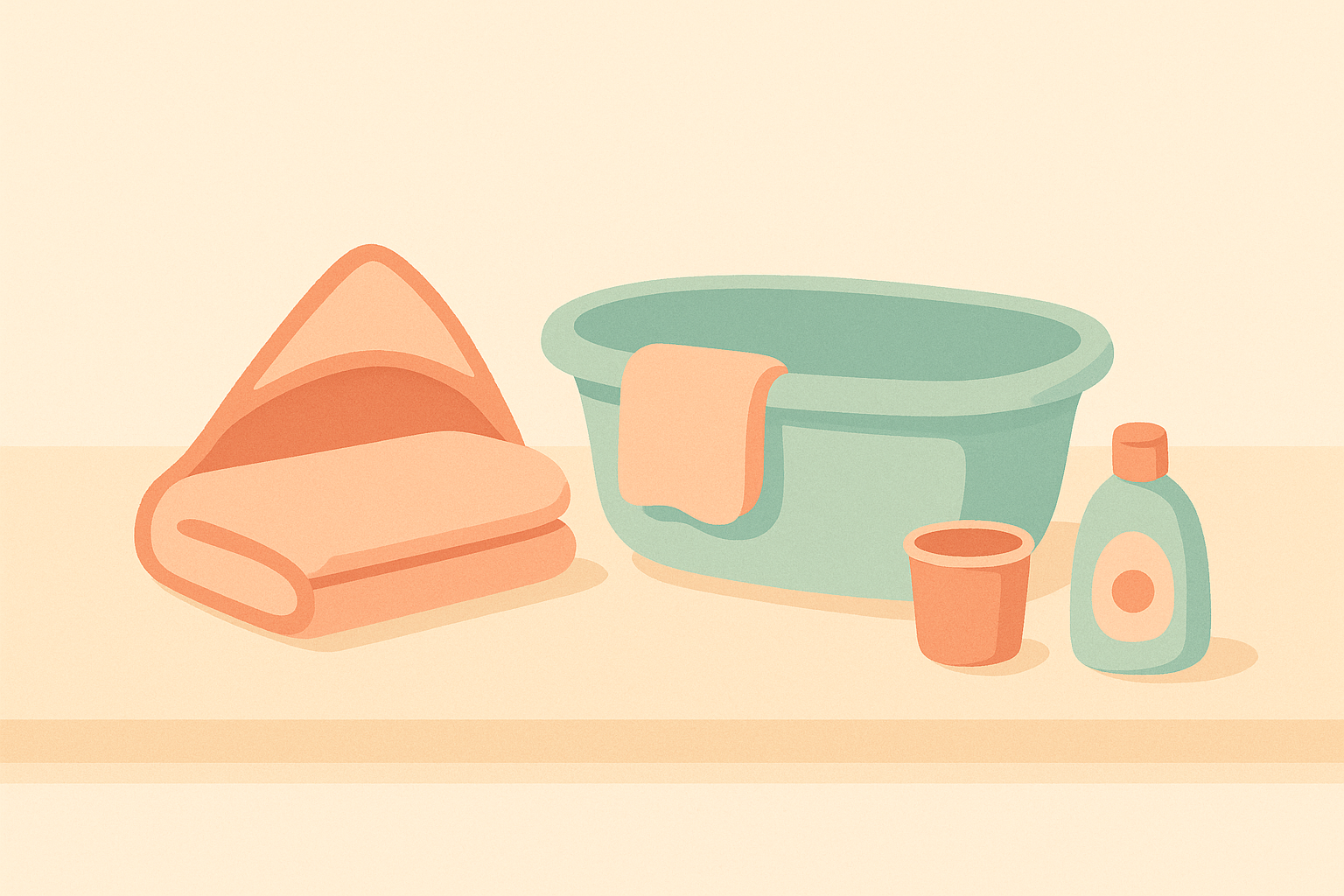
You do not need much. An infant tub or a clean sink insert, two washcloths, a hooded towel, a small cup for rinsing, a gentle fragrance free baby wash if you use one, a clean diaper, and the outfit you plan to put them in afterward. Many parents find it helps to lay the towel out open and ready so you can wrap your baby immediately when they come out.
Water temperature deserves a moment of attention. Comfortably warm is the goal, around 100 degrees Fahrenheit or about 38 degrees Celsius, which will feel barely warm to your hand. Test it with your wrist or the inside of your elbow rather than your fingers, because those spots are far more sensitive. If your home water heater runs hot, some parents lower the setting as an extra precaution.

Never leave your baby alone in the bath, not even for a second, and not even in a bath seat. If the doorbell rings, wrap them up and take them with you.
How to Bathe a Newborn Step by Step
Once the cord stump has healed and you are ready for a tub bath, fill the infant tub with only two to three inches of warm water. That is far less than most people expect, and it is enough. Undress your baby with the towel nearby, then lower them in feet first, supporting their head and neck with your forearm and holding them under the far armpit with that same hand. This grip leaves your other hand completely free.
Wash in the same order you would for a sponge bath. Face first with plain water, then neck creases, arms, hands, chest, back, legs, and the diaper area last. Use your free hand and a soft washcloth, and cup water over your baby's body every so often so they stay warm. If you are using a cleanser, a small amount goes a long way and plain water is genuinely fine for many baths in the early weeks.
For hair, there is not usually much of it, so a damp cloth over the scalp is often all you need. Tip your baby back slightly and use the cup to rinse away from the face. When you are finished, lift them out with both hands, wrap them straight into the hooded towel, and pat dry paying attention to every fold. Most newborn baths take about five to ten minutes from start to towel, and shorter is better than longer.
How Often to Bathe a Newborn
Newborns do not get particularly dirty. They are not crawling through the yard or eating spaghetti with their hands yet. Most pediatricians suggest two to three baths a week in the early months, because more frequent bathing can strip the natural oils from very new skin and leave it dry or flaky. What matters far more is keeping the face, neck folds, and diaper area clean between baths.
As your baby gets older and starts solids, rolling, and playing, bath frequency naturally increases. Many families drift toward a daily bath somewhere in the second half of the first year, often because it becomes a nice wind down cue rather than because the baby needs it. Here is a rough sense of how it tends to change.
| Age | Typical bath frequency | What most parents focus on |
|---|---|---|
| Birth to cord healing | Sponge baths, 2 to 3 times a week | Keeping the cord stump dry, cleaning neck and diaper area daily |
| Cord healed to 3 months | 2 to 3 tub baths a week | Short shallow baths, gentle or no cleanser, drying skin folds well |
| 3 to 6 months | 2 to 4 times a week | Bath starting to become part of a predictable evening rhythm |
| 6 to 12 months | Every day or every other day | Solids and crawling mean more mess, plus splashing and play time |
These are common patterns rather than requirements. Babies with eczema or other skin conditions may need a different schedule, so follow the plan your pediatrician gives you.
Dry patches, redness, or persistent flaking are worth mentioning at your next appointment. Some babies may have sensitive skin that needs a gentler routine, and our overview of baby eczema basics covers what parents commonly notice and when it is worth asking a professional.
When Your Baby Hates Bath Time
Plenty of newborns cry through their first several baths, and it is rarely about the water. For most babies the objection is being undressed, the temperature change on bare skin, and the loss of that snug swaddled feeling they are used to. Once you know that, the fixes become fairly obvious.
Warm the bathroom first, keep the bath short, and try laying a warm damp washcloth across your baby's chest and tummy while they are in the tub. That small bit of coverage helps many babies settle immediately. Talking or humming the whole time gives them something familiar to anchor to, and going slowly with your movements tends to help more than rushing.
Timing matters too. A bath when your baby is overtired or genuinely hungry rarely goes well. Many parents find that a stretch after a feed, once the initial fullness has passed and before the next sleepy window, is the sweet spot. If bath time is consistently a struggle, there is no harm in switching back to quick sponge baths for a couple of weeks and trying again. It is not a step backward.
Making Bath Time Part of Your Routine
Somewhere around the two to three month mark, many families start using the bath as an anchor for the evening. Warm water, dim lights, a fresh diaper, pajamas, and a feed make a lovely predictable sequence, and babies pick up on repeated cues long before they can understand them. If you are building that kind of wind down, our guide to a baby bedtime routine walks through what tends to work at each age.
You do not have to bathe at night, though. Some babies get energized by the water instead of sleepy, and for those families a morning or midday bath fits better. Every baby is different, and the right time is simply the one that leaves everyone calmer. Fitting it into the flow of your existing daily routine with a newborn usually matters more than the specific hour.
Whatever rhythm you land on, give yourself permission to keep it simple. A short warm bath a few times a week, dry skin folds, a snug towel, and a familiar voice are the whole recipe. The rest is just practice, and you will get there faster than you expect.
Keep track of baths without keeping it all in your head
Pippy lets you log bath times alongside feeds, sleep, and diapers, so you can see at a glance when your baby was last bathed and which time of day tends to leave them calmest. No more wondering whether it was two days ago or four.
Try Pippy FreeFrequently Asked Questions
If you are still in those very first days at home and everything feels new at once, our guide to the first week home with a newborn covers the other basics that tend to come up alongside bath time.