
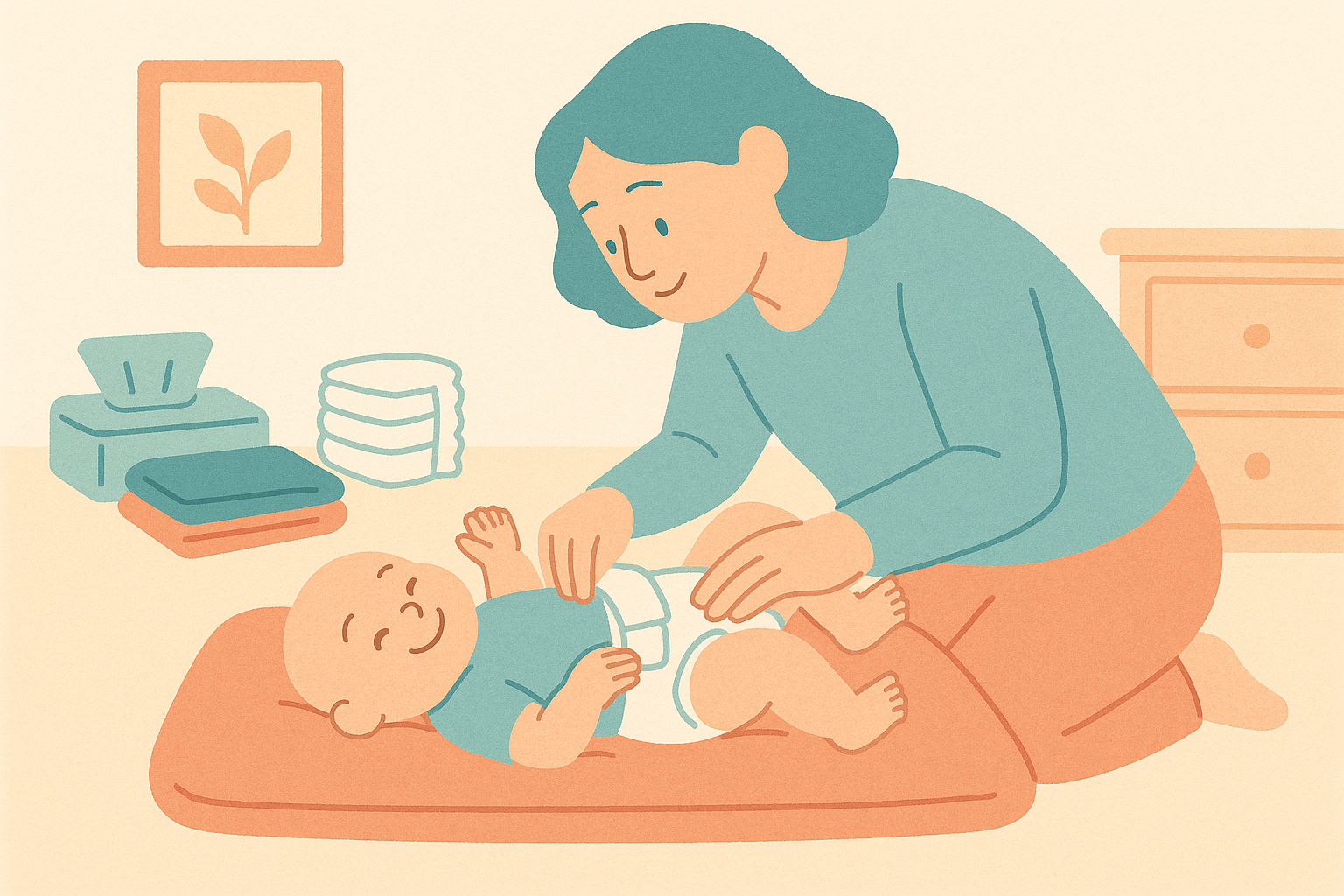
If you have ever picked your baby up after a nap and felt that telltale dampness creeping up their back, you already know the diaper blowout. It is one of those tiny parenting rites of passage that nobody warns you about, and it always seems to happen on a clean outfit, in the car seat, or five minutes before you need to leave the house.
The good news is that learning how to prevent diaper blowouts is mostly about a few small habits, not luck. Most blowouts come down to fit, timing, and a couple of simple tricks you can do in seconds at the changing table. Many parents find that once they make a few adjustments, the wardrobe changes become a lot less frequent.
Below we will walk through why blowouts happen, what to check on the diaper itself, and the practical steps that tend to make the biggest difference. Keep in mind that every baby is different, so it may take a little trial and error to find what works for yours.

Blowouts feel like a you problem, but they are almost always a fit problem. A few tweaks at the changing table can save a whole lot of laundry.
Why Diaper Blowouts Happen
A blowout is simply what happens when there is more in the diaper than the diaper can contain, and the contents find the path of least resistance. That path is usually the back waistband or the leg openings, which is why so many blowouts travel straight up the spine. Understanding where the gaps are is the first step to closing them.
In the newborn weeks, stools are frequent and very loose, sometimes almost liquid, which makes them easy to escape even a well-fitted diaper. This is completely normal for many babies, especially those who are breastfed. As your baby grows and their digestion matures, stools often become more formed and predictable, and the dramatic blowouts tend to ease up on their own.
Fit is the other big piece. A diaper that gaps at the waist or legs leaves an open door, and a diaper that is overdue for a change simply runs out of room. Some babies may also have a body shape, like skinny thighs or a long torso, that makes certain brands fit better than others. None of this means anything is wrong, it just means the current setup has a weak spot worth adjusting.
Getting the Fit and Size Right
The single most useful habit is checking that the diaper actually fits before you walk away from the changing table. A good diaper should sit snugly around the waist, with the top edge near the belly button and no obvious gaping when your baby moves their legs. You want to be able to slip one or two fingers under the waistband, but not a whole hand.
Sizing is where a lot of parents get tripped up, because diaper sizes are based on weight, not age, and the ranges overlap between brands. If your baby is near the top of the weight range for their current size, or if you are seeing red marks, frequent leaks, or a struggle to fasten the tabs, those are common signs it may be time to size up. A diaper that is too big can leak too, so the goal is snug coverage, not just a larger number.
Brand matters more than people expect. Two diapers labeled the same size can fit very differently, with different leg gather designs and waistband heights. Many parents find it helpful to keep a small stash of a second brand on hand so they can compare, and to remember that a diaper that worked beautifully at one stage may need to change as your baby grows.

If you log diaper changes in Pippy, you can spot patterns, like more leaks right before you size up, so the next change feels less like guesswork.
Small Tricks That Make a Big Difference
The most famous fix is the back-roll trick. After you fasten the diaper, run a finger along the inside of the back waistband and gently pull or roll the elastic ruffles outward so they sit flush against your baby's skin rather than tucked inward. Tucked-in ruffles create a little channel that messes love to follow, and flipping them out closes that channel. It takes about two seconds and it is the step many parents swear by.
The leg gathers deserve the same attention. Run a finger around each leg opening to make sure the ruffles are pulled out and not folded in against the thigh. Folded-in gathers are one of the most common causes of leg leaks, and smoothing them out gives you a much better seal where it counts.
A few other habits help too. Make sure the tabs are fastened evenly on both sides so the diaper sits straight, and that the front is pulled up high enough to cover the belly. For overnight or long stretches, some parents size up just for sleep to get extra capacity. If a particular outfit always seems to end in disaster, a snug onesie worn under clothes can act as a gentle backstop, though it is no substitute for a good fit.
A Quick Diaper Size Reference
The chart below offers a general starting point for diaper sizing by weight. These are approximate, because every brand sets its own ranges and every baby is built a little differently. Use it as a rough guide, then let the actual fit on your baby be the final word.
| Diaper Size | Approximate Weight | What Parents Often Notice |
|---|---|---|
| Newborn | Up to about 10 lbs | Frequent, very loose stools, so fit and quick changes matter most |
| Size 1 | About 8 to 14 lbs | A common everyday size for the early weeks and months |
| Size 2 | About 12 to 18 lbs | Often a good move when tabs feel tight or leaks increase |
| Size 3 | About 16 to 28 lbs | More mobility, so check leg gathers and consider sizing up for sleep |
| Size 4 | About 22 to 37 lbs | Stools usually more formed, blowouts often less dramatic |
Weight ranges are approximate and vary by brand. Always check your specific diaper package and let the fit on your baby guide you.
Timing and Changing Habits
Even the best-fitting diaper can only hold so much, so timing plays a quiet but important role. Changing your baby promptly after a feed, when many babies tend to go, gives the diaper less to manage at once. The newborn stage in particular can mean a lot of changes, and that is normal. If you want a sense of what is typical, our guide to newborn diaper output in the first week walks through what many parents see early on.
Paying attention to your baby's natural patterns helps too. Some babies are fairly predictable and tend to have a bowel movement around the same times each day, while others keep you guessing. Noticing those rhythms, including a familiar grunt or pause, can give you a heads-up to do a quick change before things overflow. If you are ever unsure whether what you are seeing is normal, our baby poop color guide can help you make sense of it.
It also helps to be ready when you are out and about, since blowouts have a way of choosing the least convenient moment. A well-stocked bag with a spare outfit and plenty of supplies takes a lot of the stress out of it, and our post on what to pack in a diaper bag covers the essentials. When you track changes in Pippy, you can also glance back and notice if leaks cluster around a certain time of day or a certain size, which makes the next fix easier to find.

Blowouts are messy but usually harmless. If watery stools keep coming or your baby seems unwell, that is a moment to check in with your pediatrician.
When to Talk to Your Pediatrician
Most diaper blowouts are a laundry problem, not a medical one, and they are not something to worry about on their own. Still, the contents of the diaper can sometimes offer a clue about your baby's health, so it is worth paying attention to changes that go beyond the occasional mess.
Many parents find it reassuring to check in with their pediatrician if their baby has frequent, very watery stools that seem like more than the usual, if there is blood or mucus in the stool, or if blowouts come alongside signs of illness like fever, vomiting, or unusual fussiness. Watery stools can also lead to fluid loss, so our guide to signs of dehydration in babies is a helpful companion read. On the flip side, if your baby seems uncomfortable and is going far less often, our post on baby constipation may be useful.
The bottom line is that you know your baby best. Trust your instincts, and never hesitate to reach out to your pediatrician or healthcare provider with questions about your baby's health. They would much rather answer a quick question than have you worry.
Spot Your Baby's Diaper Patterns With Pippy
Pippy makes it easy to log every diaper change in seconds, so you can see when leaks tend to happen, notice when it might be time to size up, and share a clear record with your pediatrician.
Try Pippy Free