
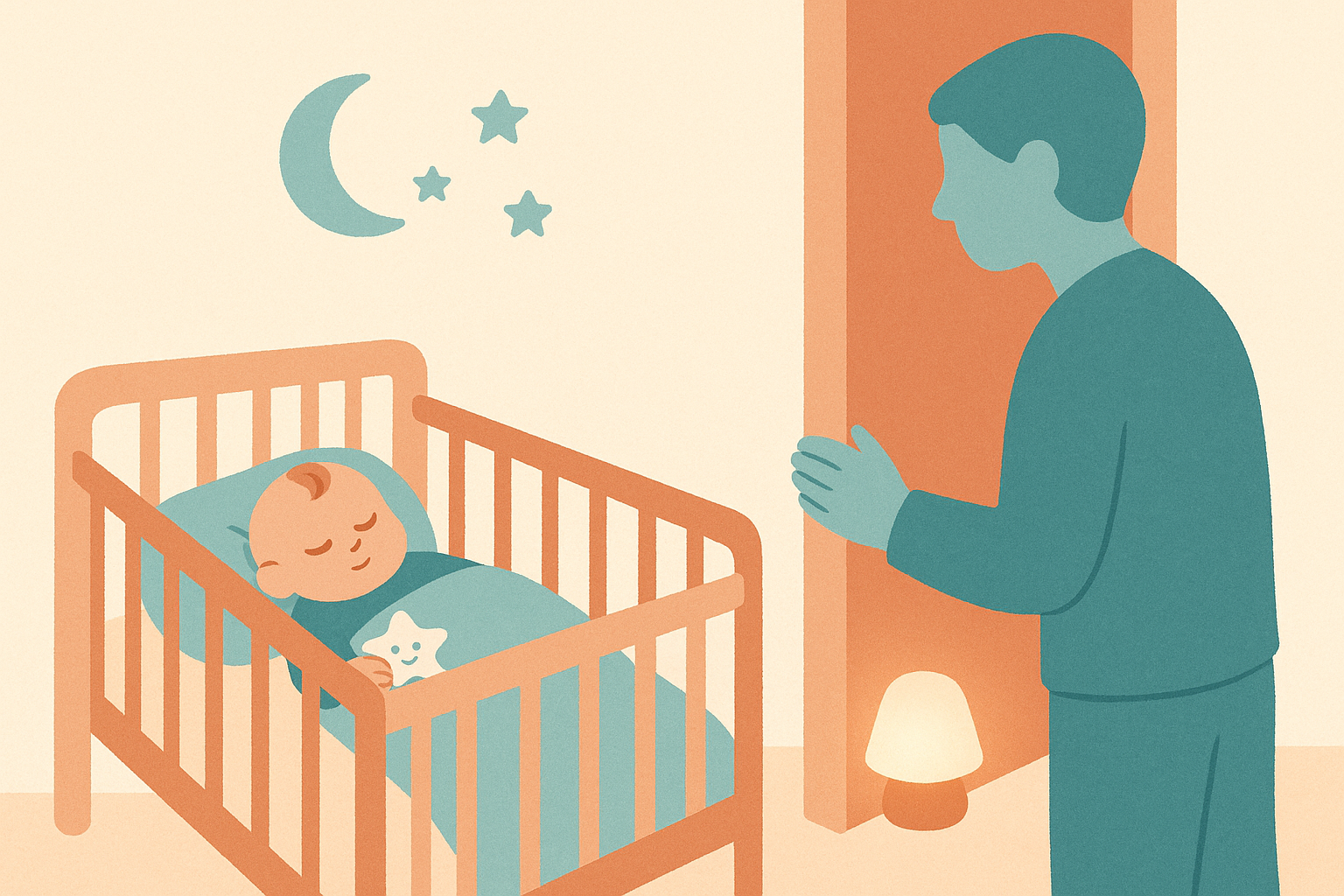
If you are reading about sleep training methods, chances are you and your baby are both a little tired. That is a very normal place to be. Many parents reach a point in the first year when they start wondering whether there is a gentler way to help their little one fall asleep more independently, and the topic of sleep training comes up at the playground, in a group chat, or in a sleepy three a.m. search bar.
The good news is that there is no single right answer, and the variety of approaches means most families can find something that fits their values and their baby's temperament. Some methods move quickly, others unfold gently over a few weeks. All of them have helped real families, and none of them are required. If you are happy with how nights are going, you can absolutely keep doing what you are doing.
This guide walks through the most common sleep training methods so you can have an informed conversation with your partner and your pediatrician about what might work for your family. Every baby is different, so think of this as a starting point rather than a checklist.

Sleep training is personal. There is no gold star for choosing the fastest method or the gentlest one, only what works for your baby and your family right now.
What Sleep Training Actually Means
At its heart, sleep training is the process of helping your baby learn to fall asleep on their own. That includes falling asleep at the start of the night and, just as importantly, falling back to sleep between natural sleep cycles. Babies, like adults, wake briefly several times a night. The goal of sleep training is not to stop those wakeups, since most are completely normal, but to help your baby resettle without needing the exact same conditions that put them to sleep at bedtime.
Many parents find it helpful to think of sleep training as teaching a skill rather than fixing a problem. Falling asleep independently is something most babies can learn over time, in much the same way they learn to roll over or self feed. Some little ones pick it up easily, others need more practice and more patience. Both are normal.
It is worth saying out loud that sleep training is not the same as ignoring your baby. Even the more direct methods include daytime closeness, a consistent bedtime routine, and a quick check on baby's wellbeing before and during the night. The version of sleep training that works for your family will still be full of love.
When to Start Sleep Training
Most pediatricians suggest waiting until at least 4 to 6 months before starting formal sleep training. By that age, many babies are developmentally able to sleep for longer stretches at night, their nervous systems have matured a bit, and they are usually no longer relying on a feed every two hours around the clock. Younger babies still benefit from gentle wind down cues and a calm sleep environment, but the more structured methods tend to work best a little later.
It is also worth checking in on a few practical things before you start. Is your baby gaining weight as expected? Are night feeds still important for nutrition, or have they become more of a comfort habit? Has your pediatrician cleared baby for longer sleep stretches? Many parents find that having a quick chat at a routine well visit clears up a lot of the worry that can come with making this decision.
Timing also matters in your day to day life. Most families find sleep training easier when the household is otherwise calm. If you are about to travel, move, return to work, or start daycare, it can be kinder to wait a couple of weeks until things settle. Our notes on sleep regressions can also help you decide whether the rough patch you are in is just a passing wave.
Common Sleep Training Methods
There are more sleep training methods than most parents realize, but they tend to fall into a small handful of categories. They differ in how much you intervene during the night and how quickly you make changes. Here are the approaches you will hear about most often.
Cry It Out (Full Extinction)
The cry it out method, sometimes called full extinction, means putting your baby down awake at bedtime and not returning until morning, aside from any planned night feeds and safety checks. The idea is to remove the wake to sleep association entirely, so baby learns to settle without your help. This approach tends to work the fastest, often within a few nights, but the first two or three nights can be intense for everyone in the house. Many parents pair this with a strong daytime connection routine.
Ferber Method (Graduated Extinction)
The Ferber method, named for pediatrician Richard Ferber, uses timed check ins at gradually increasing intervals. After bedtime, you wait a few minutes before going in for a brief, calm reassurance, then a longer interval, then longer again. You do not pick baby up, you simply offer a quick word and a gentle pat. Many parents find this method strikes a balance between progress and ongoing comfort. It usually shows results within about a week.
Chair Method (Camping Out)
The chair method is one of the gentler structured approaches. You sit in a chair next to the crib while baby falls asleep, offering quiet reassurance without picking up. Every few nights, you move the chair a bit farther away, until you are eventually just outside the door. This method usually takes 1 to 3 weeks. Some babies may find the parent's presence stimulating, which is something to watch for as you go.
Pick Up, Put Down
With the pick up, put down method, you respond to baby's cries by picking them up briefly to calm them, then placing them back in the crib while they are still awake. You repeat as often as needed. This approach is very hands on and tends to work best for younger babies, often around 4 to 6 months, before they are big enough to find the repeated transitions frustrating. Many parents pair it with a familiar lovey or a soft white noise sound.
Bedtime Fading
Bedtime fading is one of the most subtle methods. You start by putting baby to bed at the time they naturally fall asleep, even if that is later than you would like, so bedtime is met with genuine tiredness instead of resistance. Once baby is reliably falling asleep on their own, you gradually shift bedtime earlier in small increments of 10 to 15 minutes every few nights, until you reach your goal. Many families combine this with another method for nighttime wakeups.
A Side by Side Comparison
It can be easier to picture the differences between sleep training methods when they are laid out next to each other. The table below is a quick reference for the most common approaches, including how they work and the kind of family they tend to suit.
| Method | How It Works | Typical Duration | Often a Good Fit For |
|---|---|---|---|
| Cry It Out | Put baby down awake, no return until morning aside from planned feeds and safety checks | 3 to 7 nights | Families ready for a faster, more direct process |
| Ferber Method | Brief, calm check ins at increasing time intervals | 3 to 7 nights | Parents who want some contact without picking up |
| Chair Method | Sit by the crib, gradually move the chair toward the door | 1 to 3 weeks | Families who prefer a gradual, in the room approach |
| Pick Up, Put Down | Briefly comfort in arms, then return to crib still awake | 1 to 2 weeks | Younger babies who respond well to brief soothing |
| Bedtime Fading | Match bedtime to natural sleep cues, then shift earlier over time | 2 to 4 weeks | Babies who fight bedtime or seem overtired |
Time ranges are general guidance. Some babies move faster than this and some need a little more time. Talk to your pediatrician about what is reasonable for your child.
Choosing the Right Method for Your Family
There is no universally best sleep training method, only the method that fits your baby, your values, and the season your family is in. A great place to start is your own comfort level. If the idea of any extended crying feels wrong to you, a gentler method like the chair approach or bedtime fading will likely be easier to stay consistent with. If you feel like a quick reset is what your family needs, a more direct method might suit you better. Consistency matters far more than which specific method you choose.
Your baby's temperament matters too. Some babies are soothed by a parent in the room and others find the same presence stimulating, which can make a method like cry it out a better fit for that little one. Many parents find that they need to make small adjustments after the first night or two. That is not failing, that is paying attention.
If you have a partner, it is worth talking through the plan together before you start, including who handles which night wakeups and what you will do if one of you wants to abandon the plan at three in the morning. Our notes on splitting baby duties with a partner can help here. And of course, talk to your pediatrician about any specific concerns before you begin.
What to Expect in the First Week
The first few nights of any sleep training plan tend to be the hardest. Many parents find that night one and night two are the most challenging, with crying that may peak before settling. Night three is often a little better, and by night five or six, many families notice real progress. Gentler methods spread that learning curve out over a longer window, so the change is less intense but takes a couple of weeks to feel established.
Progress is not always linear. Some babies do beautifully for a few nights, then have a rough night out of nowhere. That is very normal and not a reason to give up. Common culprits for a sudden setback include teething, a developmental leap, a daytime nap that ran long or short, or a wake window that drifted off. Many parents find it helpful to keep a quick log of bedtime, wakeups, and what soothed baby fastest, so patterns become easier to spot.
It is also normal for parents to feel a wave of emotions during sleep training. Hope, doubt, guilt, relief, and exhaustion can all show up in one week. Talking with another parent who has been through it, or even a quick journal entry at the end of each night, can help take some of the weight off your shoulders.

Tracking bedtime, wakeups, and feed times during the first week can take the guesswork out of how things are going. Tiny improvements often show up in the numbers before they feel obvious in the moment.
When to Pause or Try Again Later
It is completely okay to pause sleep training and try again at a calmer time. Some seasons just are not the right ones. Travel, family visits, a move, an illness, a serious round of teething, or a parent's own demanding work week are all good reasons to take a short break. Picking back up a week or two later is not starting from scratch, since babies remember more than we give them credit for.
If your baby is sick or running a fever, comfort comes first. Most pediatricians recommend pausing structured sleep training during illness and resuming once baby is fully well again. The same is true if you notice unusual signs like changes in feeding, breathing, or alertness, in which case it is always worth a call to your pediatrician rather than continuing on with a plan.
Finally, if you have been consistent for two full weeks and nothing feels like it is improving, it can be worth a step back rather than pushing through. Many parents find that the issue is not the method but something nearby, like an off wake window, an overtired bedtime, or a too warm room. A short conversation with your pediatrician can help rule out anything medical and give you the green light to try again with a few small changes.
Track Sleep, Naps, and Bedtimes With Pippy
Pippy makes it easy to log bedtimes, wakeups, and night feeds with one tap, so you can spot patterns and see real progress during sleep training. No spreadsheets required, just gentle data that helps you feel a little less alone at three a.m.
Try Pippy Free