
It usually comes up on a hot afternoon, or at a family gathering when someone says "she looks thirsty, give her a little water." And suddenly you are standing there wondering whether that is fine, or whether it is one of those things you are quietly supposed to know already.
The question of when babies can drink water is one of the most searched feeding questions for a reason. The answer is not obvious, it changes depending on your baby's age, and the advice from well meaning relatives often lands a generation or two out of date. The good news is that the current guidance is pretty simple once you hear it laid out.
Here is what most pediatricians recommend about water and babies, roughly how much to offer at each stage, and the practical bits nobody tells you about actually getting water into a wobbly six month old.

If someone has already offered your baby a sip of water, please do not spiral about it. A tiny taste is a very different thing from a bottle of water, and your pediatrician is happy to answer this one.
The Short Answer
Most pediatricians recommend waiting until around 6 months before offering plain water, which usually lines up with the point where babies start solid foods. Before that, breast milk or formula supplies all the fluid a baby needs, even in hot weather and even when they seem to be drinking a lot.
Once solids begin, small amounts of water become a normal part of the day. It is not about hydration at that point so much as practice. Learning to drink from a cup is a skill, and mealtimes are a low pressure place to work on it. Milk is still the main event through the first year, with water playing a supporting role.
Every baby is different, and there are situations where a pediatrician recommends something different for a specific baby. Premature babies, babies with certain medical conditions, and babies working through feeding challenges may all get individual guidance. If your baby's situation feels like an exception, ask rather than guess.
Why Newborns Do Not Need Water
The reasoning here is worth understanding, because it makes the guidance much easier to remember. A newborn's stomach is genuinely tiny, roughly the size of a cherry in the first days and still quite small at a few months old. Anything that goes in takes up space that could have held calories. Water fills a baby up without feeding them, which can mean they take less breast milk or formula at the next feed and gradually take in fewer calories than they need.
The second reason is that a young baby's kidneys are still maturing and are not yet efficient at handling extra fluid. Taking in a lot of plain water can throw off the balance of sodium in the blood, which is why pediatricians are consistent about this one. It is rare, and it generally involves repeated or large amounts rather than a single accidental sip, but it is the reason the guidance exists at all.
This also applies to watering down formula, which is worth saying plainly because it comes up when money is tight or supplies run low. Formula should always be mixed exactly as the label says. If affording formula is a worry, your pediatrician's office can point you toward local programs, and that is a conversation worth having rather than a problem to solve alone. Our guide to how much formula babies need by age covers the amounts side of this in more detail.
Water by Age: A Simple Guide
The table below reflects the general guidance many pediatricians give. Think of these as loose reference points rather than targets to hit, since appetite, weather, activity, and how much milk your baby is taking all shift the picture from day to day.
| Age | Water Guidance | Typical Daily Amount |
|---|---|---|
| 0 to 6 months | No plain water unless your pediatrician advises it. Breast milk or formula covers all fluid needs. | None |
| 6 to 9 months | Small sips offered in a cup with meals. Mostly for practice, not hydration. | About 2 to 4 oz total |
| 9 to 12 months | A cup with meals and snacks. Milk still provides most fluid and nutrition. | About 4 to 8 oz total |
| 12 to 24 months | Water freely throughout the day, alongside whole milk at meals. | About 8 to 32 oz total |
General reference ranges only. Some babies drink noticeably more or less than this and are perfectly fine. Your pediatrician can tell you what is right for your baby.
One thing many parents find reassuring is that babies over 6 months are quite good at self regulating water. If your baby takes two sips and pushes the cup away, that is a complete answer. There is no need to coax more in, and a baby who consistently drinks a lot of water instead of milk is worth mentioning at your next visit.
How to Actually Offer Water
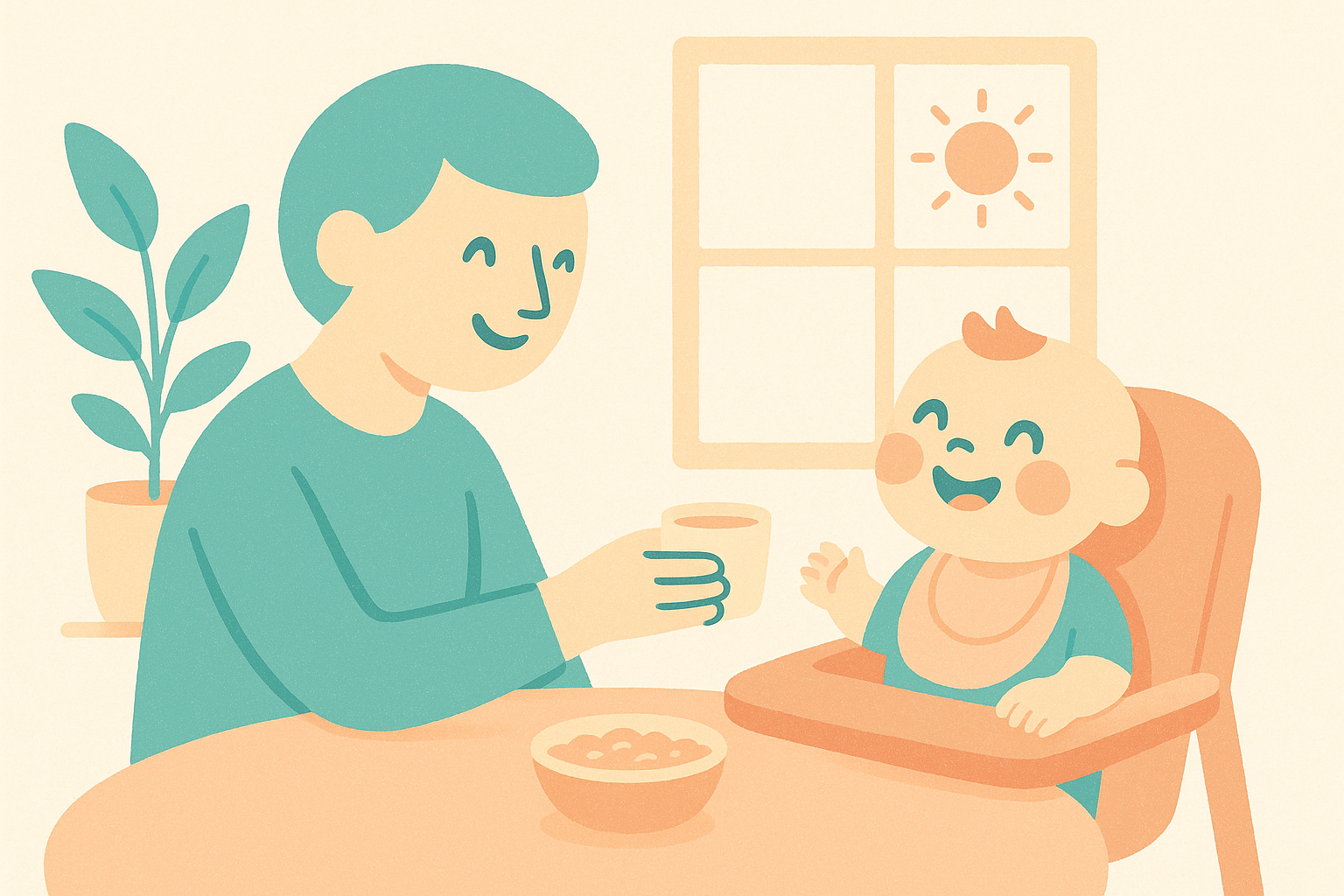
The mechanics of this trip up more parents than the timing does. Around 6 months, when you start introducing solid foods, put a small amount of water in a cup and set it on the tray at mealtimes. That is really the whole method. Some babies take to it right away, and plenty of others treat the cup as a toy for several weeks before any water goes in.
Many parents use a small open cup, since it builds the sipping and swallowing pattern that supports feeding development, and a straw cup is another popular option at this age. Expect spills either way, and expect your baby to tip the cup over on purpose at some point, because that is more or less the job description. A silicone bib and a towel under the high chair make the whole thing much less annoying.
Tap water is generally fine where the local supply is safe to drink, and many families use it straight from the tap once a baby is over 6 months. If you use well water, or you are unsure about your local supply, ask your pediatrician what they recommend. Bottled water is an option too, though it is worth checking the fluoride content with your pediatrician if your baby is drinking it regularly.

Once water joins the routine, milk amounts often shift a little. Logging feeds for a week makes it easy to see whether anything actually changed or it just felt that way.
Hot Weather, Illness, and Constipation
These are the three situations where the water question comes up most often, and each one has a slightly different answer. On hot days, babies under 6 months do not need water. What they usually need is more frequent breast or bottle feeds, since breast milk in particular adjusts to meet fluid needs. Shade, light clothing, and a cool room do more than any drink would. Our post on keeping baby cool in hot weather goes through the practical side of this.
During illness, especially with vomiting or diarrhea, do not improvise. Plain water is not the right choice for a sick young baby, and pediatricians usually recommend a specific approach, sometimes involving an oral rehydration solution, sometimes just more frequent milk feeds. Call your pediatrician's office rather than working it out from a search result, and read up on the signs of dehydration in babies so you know what to watch for.
For constipation, water can help once a baby is over 6 months and eating solids, usually alongside fiber rich foods like pureed prunes, pears, or peas. It is one tool among several rather than a fix on its own. For younger babies, water is not the recommended approach and your pediatrician should guide anything you try. There is more on the whole picture in our guide to baby constipation.
Water After the First Birthday
Things loosen up considerably around 12 months. At that point water can be available throughout the day, and many families keep a cup within reach so their toddler can drink whenever they want. Whole cow's milk typically joins meals at this stage, with water covering everything in between.
The general guidance is that toddlers do well with water as their main between meal drink, with juice kept small if it appears at all and other sweetened drinks skipped. This is partly about teeth and partly about appetite, since drinks that fill a toddler up tend to show up later as a skipped meal.
Amounts vary enormously from toddler to toddler and from day to day. A very active toddler in summer will drink far more than the same child on a rainy indoor day, and both are normal. What tends to matter more than any number is that water is easy to reach and offered regularly, without turning it into a battle.
See how water fits into your baby's day
Pippy logs bottles, nursing sessions, solids, and water in a couple of taps, so when you start offering a cup at 6 months you can see at a glance whether milk intake is holding steady or drifting down.
Try Pippy FreeWhen to Talk to Your Pediatrician
Water is one of those topics where a quick question at a routine visit saves a lot of second guessing at home. It is worth asking specifically if your baby was born early, has any medical condition affecting feeding or kidney function, or is on a specialized formula, since the general timeline may not apply.
Reach out sooner if your baby has noticeably fewer wet diapers than usual, seems unusually sleepy or difficult to rouse, has a dry mouth or no tears when crying, has a sunken soft spot, or is vomiting or having diarrhea. Those are signs worth a call rather than a wait and see. It is also worth mentioning if your baby over 6 months seems to be filling up on water and taking much less milk, since milk is still doing most of the nutritional work in the first year.
And if someone gave your baby water before 6 months, a single sip is not something to panic about. Mention it at your next visit if you want the reassurance. Trust your instincts, ask the question, and let your pediatrician sort out anything that feels uncertain. You can find more feeding guides over at Pippy.