
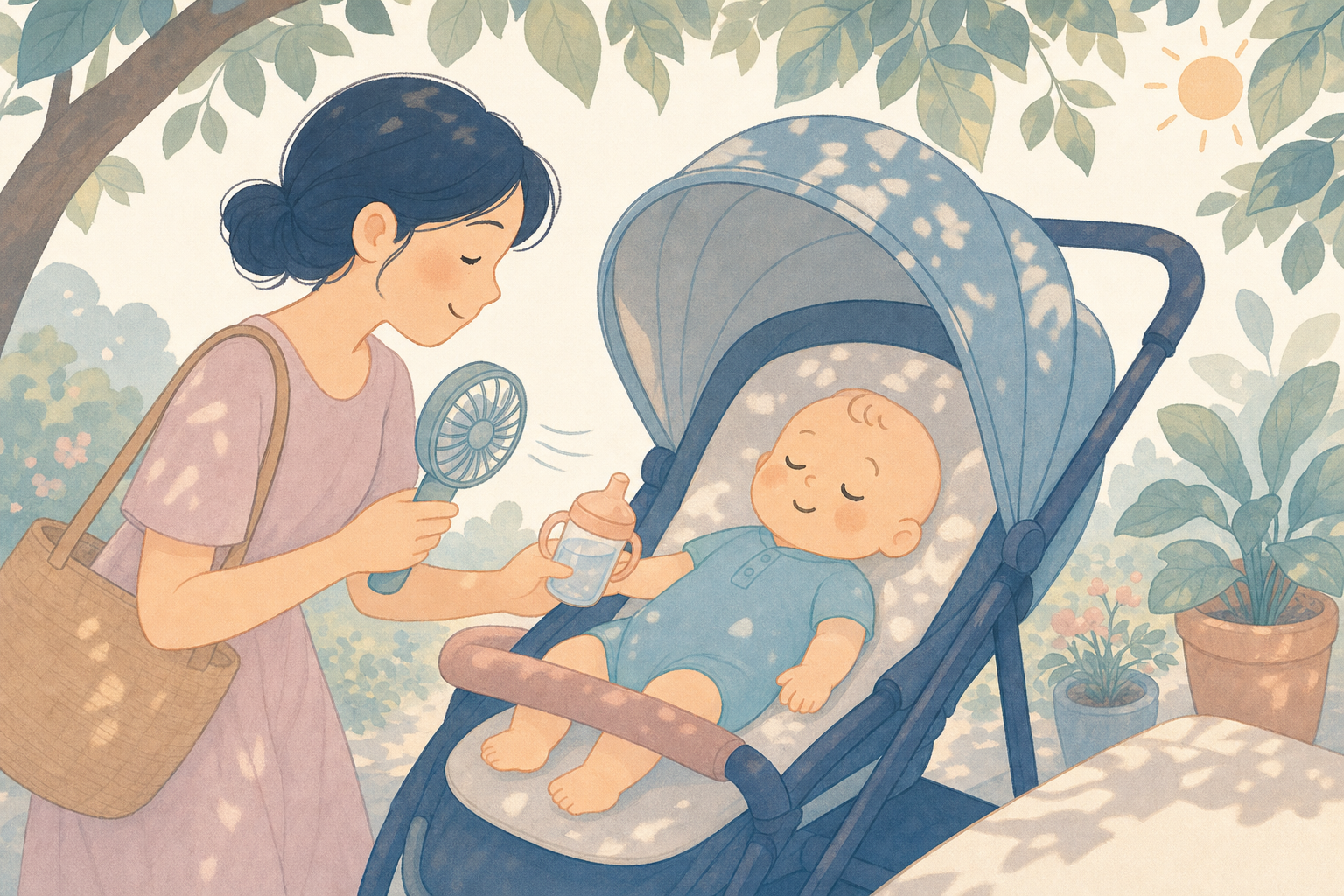
The first properly hot week with a new baby has a way of making everything feel harder. Naps get shorter, feeds get more frequent, and you find yourself standing in front of the dresser wondering whether one thin layer is too much or not enough. If you have been quietly worrying about whether your baby is too warm, you are in very good company.
Babies do not regulate their own temperature as well as adults do. They have more skin surface relative to their size, they cannot kick off a blanket or ask for a drink, and they rely entirely on you to notice when the room has crept up a few degrees. That sounds like a lot of pressure, but in practice keeping a baby cool comes down to a handful of small, repeatable habits.
Below we will walk through what to dress your baby in, how to think about room temperature, hydration on hot days, staying safe on outings, and the signs of overheating that are worth a call to your pediatrician. Every baby is different, so take these as general guidance and let your own baby's cues fill in the rest.

A good rule of thumb many parents use: dress your baby in about one light layer more than you are comfortable in, and check the back of their neck rather than their hands.
Why Babies Overheat More Easily
A newborn's temperature control system is still learning its job. Babies sweat less efficiently than adults, and a young baby's ability to shed heat is limited, so warmth builds up faster than you might expect. That is part of why a room that feels merely pleasant to you can feel genuinely warm to a baby wrapped in a swaddle.
Their size works against them too. A baby has a lot of skin surface relative to their body weight, which means they both lose and gain heat from their surroundings quickly. A stroller sitting in direct sun, a car that has been parked for twenty minutes, or a sunny corner of the living room can all warm up much faster than the surrounding air.
The last piece is simply that babies cannot do anything about it. They cannot push off a blanket, move to the shade, or tell you they are uncomfortable. Fussiness, restless sleep, and cluster feeding on a hot day are often the only signals you get, which is why a quick temperature check becomes such a useful habit in summer.
What to Dress Your Baby In
Light, breathable, and loose is the general aim. Natural fibers like cotton and muslin let air move and absorb moisture, while heavier synthetics and fleece tend to trap heat. On a warm day a short-sleeve cotton onesie is often plenty, and on a very hot day some parents go down to just a diaper indoors.
Layers are more useful than a single perfect outfit, because you can add and remove them as the day shifts. Air conditioning, a shaded park, and a hot car park can all happen within an hour, and a thin cardigan or muslin wrap you can pull off quickly handles that better than a thick sleepsuit you are committed to. A wide-brimmed hat outdoors is a genuinely useful layer too, since it shades the face and neck without adding warmth to the body.
To check how your baby is doing, feel the back of their neck, their chest, or between the shoulder blades. Hands and feet often run cool even when a baby is perfectly warm, so they are not a reliable guide. Skin that feels hot or slightly damp at the neck usually means it is time to remove a layer.

Logging feeds and diapers in Pippy on hot days makes it easy to see whether your baby is feeding more often or having fewer wet diapers than usual.
Room Temperature and Sleeping Cool
Most guidance points to keeping a baby's room somewhere in the range that feels comfortable to a lightly dressed adult, often quoted as roughly 68 to 72 degrees Fahrenheit. A simple room thermometer takes the guesswork out of it, since bedrooms upstairs can sit several degrees warmer than the rest of the house on a summer evening.
If the room runs hot, there is a lot you can do before reaching for air conditioning. Closing blinds during the day keeps the sun from baking the room, and opening windows in the cooler evening hours helps flush the heat out. A fan is fine to use as long as it is not blowing directly on your baby, and pointing it toward a wall or across the room circulates air without a constant draft.
Safe sleep rules do not change in hot weather. The crib should stay clear of loose blankets, pillows, and bumpers, and your baby should sleep on their back on a firm, flat surface. Instead of a blanket, many parents use a lightweight sleep sack with a low TOG rating, or simply a single light layer. Our safe sleep guidelines post covers the essentials, and if you are moving away from a swaddle, when to stop swaddling walks through that transition.
A Quick Layering Guide
The table below is a rough starting point for how to dress a baby at different room temperatures. Treat it as a conversation starter rather than a rule, since babies vary and so do homes. The neck check is always the better final answer.
| Room Temperature | A Common Starting Point | What to Watch |
|---|---|---|
| Above 78°F (26°C) | Diaper only, or a short-sleeve cotton bodysuit | Damp neck, flushed cheeks, restless sleep |
| 75 to 78°F (24 to 26°C) | Short-sleeve bodysuit, no sleep sack or a very light one | Sweating around the hairline |
| 69 to 74°F (21 to 23°C) | Bodysuit plus a light sleep sack | Comfortable chest, cool hands are fine |
| 64 to 68°F (18 to 20°C) | Long-sleeve sleepsuit plus a light sleep sack | Cool chest or back may mean adding a layer |
These ranges are approximate and vary by baby, bedding, and home. Check the back of the neck or chest and adjust from there, and ask your pediatrician if you are unsure.
Hydration on Hot Days
Babies under 6 months generally get everything they need from breast milk or formula, and plain water is usually not recommended for them because it can fill a small stomach without providing nutrition. What often happens on hot days instead is that babies want to feed more frequently, in shorter sessions. That is a normal way for a baby to top up fluids, even though it can feel like a step backwards after a settled week.
If you are breastfeeding, feeding on demand and drinking plenty yourself is the usual advice. If you are formula feeding, prepare bottles as normal rather than diluting them, since watering down formula is not safe. Once your baby is on solids, small sips of water with meals are commonly introduced, and your pediatrician can tell you what makes sense at your baby's age.
Wet diapers are one of the clearest everyday signals of hydration. A noticeable drop in the number of wet diapers, very dark urine, or a baby who seems unusually sleepy is worth paying attention to. Our guide to signs of dehydration in babies goes through this in more detail, and keeping a simple log in Pippy makes it much easier to notice a change rather than trying to remember it.
Going Outside Safely
Timing helps more than anything else. Many families shift walks and errands to the early morning or the evening and keep the middle of the day, roughly 10am to 4pm, for indoor time. Shade is the main tool for babies under 6 months, since sunscreen is generally not recommended at that age, though pediatricians sometimes suggest a small amount on exposed skin when shade is not an option. A hat and light long sleeves do a lot of the work.
Stroller covers deserve a special mention. Draping a muslin or blanket over the stroller feels protective, but it can trap heat and reduce airflow inside, which is the opposite of what you want on a hot day. A built-in sun canopy or a clip-on shade that leaves the sides open is a safer way to keep the sun off. It is also worth checking the stroller seat itself before you set your baby down, since dark fabric in direct sun gets hot quickly.
In the car, never leave your baby alone in a parked vehicle, even briefly and even with the windows cracked, because the interior heats up dangerously fast. Running the air conditioning for a few minutes before you set off, using window shades, and checking that buckles and metal clips are not hot to the touch all make a real difference. If you are heading somewhere further afield, our post on flying with a baby has more on travelling with a little one.

If your baby seems hot, floppy, or hard to wake, do not wait it out. That is a moment to call your pediatrician or seek urgent care.
Signs of Overheating and When to Call
Mild signs of being too warm are common and usually easy to fix. Skin that feels hot or damp at the back of the neck, flushed cheeks, sweating around the hairline, faster breathing than usual, and general fussiness all suggest it is time to remove a layer, move to a cooler room, and offer a feed. Many babies settle quickly once the heat comes off.
Heat rash is another common summer visitor. It shows up as small red or clear bumps in skin folds, on the neck, chest, or back, and it typically clears on its own once the skin is kept cool and dry. Loose cotton clothing and less time in a warm carrier or car seat usually help. If the rash spreads, looks infected, or your baby seems uncomfortable, it is worth a check with your pediatrician.
Some signs deserve prompt medical attention. Many parents are advised to call right away if their baby is unusually sleepy or difficult to rouse, is limp or floppy, is vomiting, has very few wet diapers, is breathing rapidly, or has a rectal temperature of 100.4 degrees Fahrenheit or higher in a baby under 3 months. Our post on baby fever and when to call the doctor covers the age-based thresholds in more detail.
Above all, trust your instincts. You know your baby's normal better than anyone, and a quick call to your pediatrician or healthcare provider is always reasonable when something feels off. They would far rather answer a question about a hot afternoon than have you sit and worry through it.
Keep an Eye on Feeds and Diapers With Pippy
Pippy makes it easy to log feeds, diapers, and sleep in seconds, so on hot days you can see at a glance whether your baby is feeding more often or having fewer wet diapers, and share a clear record with your pediatrician.
Try Pippy Free