
If the swaddle has been your secret weapon for those first sleepy weeks, the thought of giving it up can feel a little nerve-wracking. So many parents grow attached to that snug little burrito because it just works, and the idea of changing something that finally helped everyone sleep is understandably daunting.
Here is the reassuring part. Knowing when to stop swaddling your baby is mostly about watching for one or two clear signs, not guessing or counting down to a magic birthday. Once you know what to look for, the timing tends to feel a lot more obvious, and the transition itself can be gentler than you might expect.
Below we will walk through why swaddling helps in the first place, the single most important sign that it is time to stop, the other clues to watch for, and a few calm, practical ways to make the switch. Keep in mind that every baby is different, so a little patience goes a long way.

Stopping the swaddle is a sign your little one is growing, not a step backward. Watch your baby, not the calendar, and you will likely know when the moment arrives.
Why Swaddling Helps in the Early Weeks
Newborns spend nine months curled up in a warm, snug space, so it makes sense that a gentle wrap can feel familiar and calming in those early days. Swaddling holds the arms close and offers a cozy, contained feeling that many newborns find soothing as they adjust to the wide-open world outside.
The other big reason swaddling helps is the startle reflex, sometimes called the Moro reflex. In the first months, many babies fling their arms out suddenly when they feel like they are falling, and that little jolt can wake them right up just as they were drifting off. A snug swaddle keeps those arms gently tucked, which can help some babies settle and stay asleep a bit longer.
None of this lasts forever, though, and that is exactly the point. Swaddling is meant for the newborn stage, before your baby becomes strong and mobile enough to change position on their own. As your baby grows, the very thing that helped early on can start to get in the way, which is why knowing when to move on matters so much.
The Most Important Sign: Rolling
If you remember only one thing from this article, make it this. The clearest, most important sign that it is time to stop swaddling is any sign that your baby is starting to roll. This includes rolling from back to side or back to tummy, and even the early attempts where your baby rocks, twists, or seems to be working hard toward a roll.
The reason comes down to safe sleep. A baby with their arms wrapped cannot push up, turn their head freely, or use their hands to adjust if they end up on their tummy. Because rolling can happen suddenly and sometimes earlier than parents expect, the general guidance from most pediatricians and safe sleep experts is to stop swaddling at the first hints of rolling, even before your baby can roll all the way over. It is better to make the switch a little early than a little late.
Rolling often starts to show up somewhere around two to four months, but it varies widely, and that is completely normal. Some babies surprise their parents by rolling sooner. If you would like a closer look at this milestone and what to watch for, our guide on when babies roll over walks through the early signs in more detail.

Even the very first wobble toward rolling is your cue to retire the swaddle. When in doubt, free the arms and check in with your pediatrician.
Other Signs Your Baby Is Ready
Rolling is the big one, but it is not the only clue. Some babies make it clear in other ways that the swaddle has run its course, and paying attention to these can help you time the transition well.
One common sign is a baby who keeps breaking free. If your little one wriggles their arms out night after night, or wakes up with the swaddle loose and bunched up, the wrap may be doing more disrupting than soothing. A swaddle that comes undone can also become a loose fabric concern in the crib, which is another reason to move on once your baby is escaping regularly.
You might also notice that the swaddle simply does not seem to settle your baby the way it used to, or that your baby fights being wrapped and seems calmer with their arms free. As the startle reflex fades over the early months, many babies no longer need that snug containment to stay asleep. Every baby is different, so trust the patterns you are seeing rather than a strict rule.
A General Age Guide for Stopping the Swaddle
While the signs above matter more than any number, a rough age guide can help you know what many parents tend to see at each stage. Use the chart below as a gentle reference, and remember that your baby's own readiness, especially any signs of rolling, always comes first.
| Age Range | What Is Often Happening | Swaddle Guidance |
|---|---|---|
| Newborn to about 8 weeks | Strong startle reflex, lots of sleep, not yet mobile | Swaddling often helps, with arms snug and hips able to move freely |
| About 2 to 3 months | Startle reflex starting to ease, more awake time, early rolling attempts in some babies | Begin watching closely for any signs of rolling and start planning the transition |
| About 3 to 4 months | Many babies show signs of rolling or break free of the swaddle | The general guidance is to stop swaddling at the first signs of rolling |
| 4 months and beyond | Rolling becomes more common, babies are stronger and more active | Most babies have moved to arms-free sleepwear by now |
Ages are approximate and every baby is different. Signs of rolling, not age, are the main signal to stop swaddling. Talk to your pediatrician with any questions.
How to Transition Out of the Swaddle Gently
The good news is that ending the swaddle does not have to mean a rough few weeks. Many parents find a gradual approach the easiest on everyone. A common method is to leave one arm out of the swaddle for a few nights so your baby can get used to the new feeling, then free the second arm once that first change has settled. After both arms are out for a little while, you can move away from the wrap entirely.
Other babies do better with a clean break, going straight from a full swaddle to arms-free sleepwear in one step. This can feel abrupt, but some babies adjust surprisingly fast, and you avoid drawing the change out. There is no single right answer here. You know your baby best, so you can pick the pace that feels manageable and adjust if needed.
Whichever route you choose, leaning on a steady, predictable wind-down can make a real difference. A calm, consistent bedtime routine gives your baby familiar cues that sleep is coming, which helps when one piece of the puzzle is changing. Some parents also find that white noise offers a comforting, consistent backdrop that can ease the shift. Expect a few bumpy nights, and try to remember that many babies settle into the new normal within a week or two.

Jotting down sleep notes in Pippy during the transition can help you see the bumpy nights smoothing out, which is reassuring when you are running on little rest.
What to Use After the Swaddle
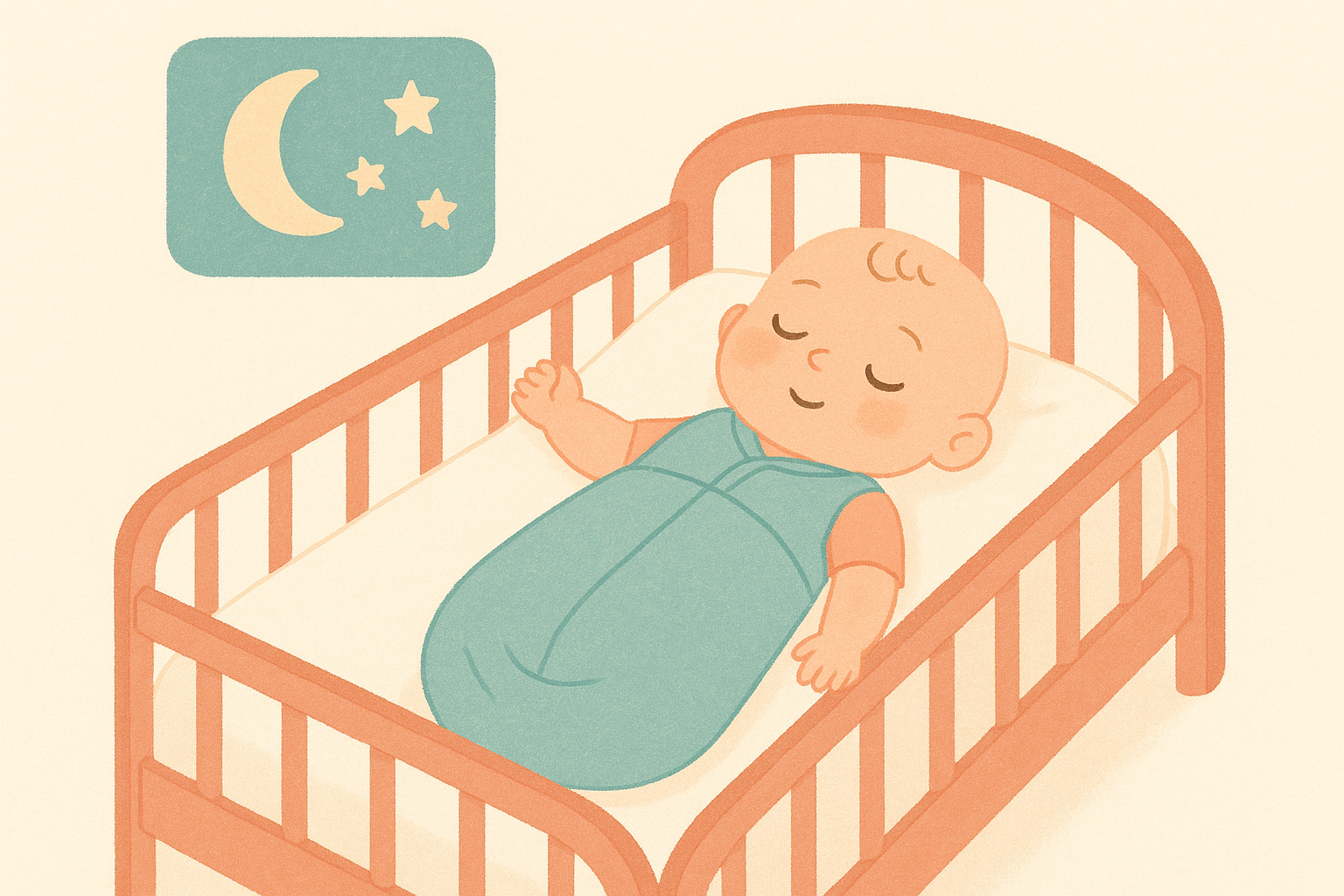
Once the arms are free, many parents move to a sleep sack, sometimes called a wearable blanket. It keeps that cozy, snug feeling around the body while leaving the arms out, so your baby can move and adjust freely. A sleep sack also stays put through the night, unlike a loose blanket, which is not recommended for young babies because of safe sleep concerns.
There are also transitional products designed specifically for this stage, including swaddle styles that convert to an arms-free sleep sack and wraps with weighted or padded arm sections. Some parents love these in-between options, while others go straight to a plain sleep sack. Both can work well, so it often comes down to what feels right for your baby and your budget.
Whatever you choose, the core safe sleep basics stay the same. Your baby should sleep on their back, on a firm, flat surface, in a crib or bassinet that is clear of pillows, bumpers, and loose bedding. For a fuller refresher on creating a safe sleep space, our overview of safe sleep guidelines is a helpful companion to this post. When you are ready to track sleep, feeds, and everything in between in one calm place, Pippy is built to make it simple.
When to Talk to Your Pediatrician
Moving on from the swaddle is a normal, healthy step, and most of the time it is something you can navigate at home with a little patience. Still, your pediatrician is always a good resource if you have questions or something does not feel right, and there is no question too small to ask.
It can be worth checking in if your baby seems to be rolling unusually early and you are unsure how to keep sleep safe, if sleep stays very disrupted for more than a couple of weeks after the change, or if you have any concerns about your baby's breathing, comfort, or development. Your pediatrician can offer guidance tailored to your baby and help you feel confident about the next steps.
The bottom line is that you do not have to figure this out perfectly or alone. Trust what you are seeing, make the switch at the first signs of rolling, and reach out to your pediatrician or healthcare provider with any questions about your baby's health and sleep.
Track Your Baby's Sleep Through the Swaddle Transition
Pippy lets you log naps, night sleep, and wake-ups in seconds, so you can spot the rough patches smoothing out as your baby adjusts to arms-free sleep and share a clear picture with your pediatrician.
Try Pippy Free